

Red Solo cups, Trader Joe’s bags, Boston hats, Fireball Whisky, brisket, and fried chicken wings: Just a few of Australians’ favourite things. I’ve been noticing these American artifacts since I returned from the States, and it got me thinking.
Many American cultural artefacts resonate outside America, of course. McDonald’s embodies American efficient capitalism. Starbucks is American everyday affluence. Smirnoff is reliable American alcohol. But the Australian favourites aren’t these. Instead, they struck a different pattern, and it stuck with me.
To step inside the neurodivergent brain for a second, I can tell you, I tried ignoring these thoughts. I would tell myself: ‘There’s nothing to this. People like American culture. You were just in South America, and the admiration for American culture was everywhere. LET. IT. GO.’ What could need less explanation than the pervasiveness of American culture?
I tried ignoring these thoughts. What could need less explanation than the pervasiveness of American culture?
But my brain kept being unnerved whenever it noticed another related data point. Neurodivergent pattern recognition is a lot like synesthesia, where related data have a similar feeling. And an unexplained pattern is a very intrusive thought. It glares at me, demanding my attention to explain it.
I was finally hit with a relieving explanation that seemed to effortlessly connect all the data, uniting them and distinguishing them. And it hit via a booty shaking on a bar counter on a Thursday night at Stonewall Hotel in Sydney (yes, named in honour of the American one). Go-go dancers had hopped up on the stage, after the staff had cleaned the surface and even created a clearance area. Patrons began gingerly placing US dollar bills into their various straps—printed copies available for pre-purchase. It was a performance of American struggle, according to strict Australian health and safety regulations, of course. Despite the nature of the performance, it wasn’t as much a sexual fetishisation as a fetishisation of American economic struggle.
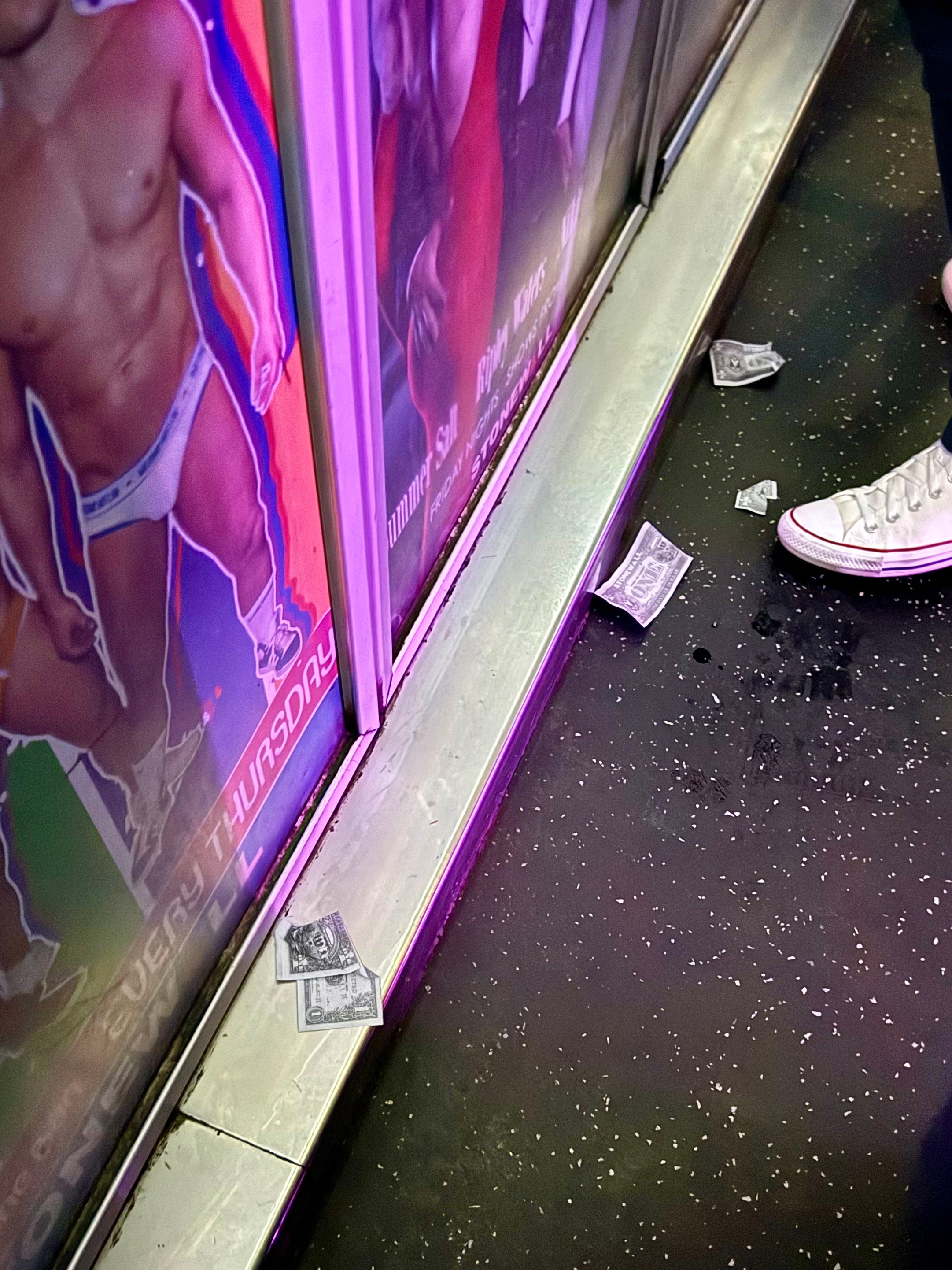
Seeing the discarded fake one-dollar bills made me feel uncomfortable. I’ve known drag performers struggle for every one of those in New York. There is a ‘bit’ that drag performers do to parody how desperately they need every dollar, where they take a bill and hold it up to the light, like Simba over the savanna. Or they run around, grabbing their dollars frantically in high heels, the contrast of elegance and desperation always getting a chuckle. But this is them sharing their struggle and owning their struggle because it’s their struggle to own. They’re joking but not pretending.
The way the fake US bills work is that it doesn’t actually matter what you do with the piece of paper because they are pre-purchased. So the dancers ‘working for tips’ are indeed pretending. And it hardly matters when compared to their minimum wage, which for a non-salary employee is $31, plus mandatory 12% super (as in superannuation, which is like American 401ks), plus a “penalty rate” for late-night work of a few dollars per hour, plus a minimum of a 3-hour shift, whether or not you work for the whole 3 hours—all before adding any additional pay for being a dancer. Just showing up for a minute guarantees $120. This isn’t America.
Just showing up for a minute guarantees $120. This isn’t America.
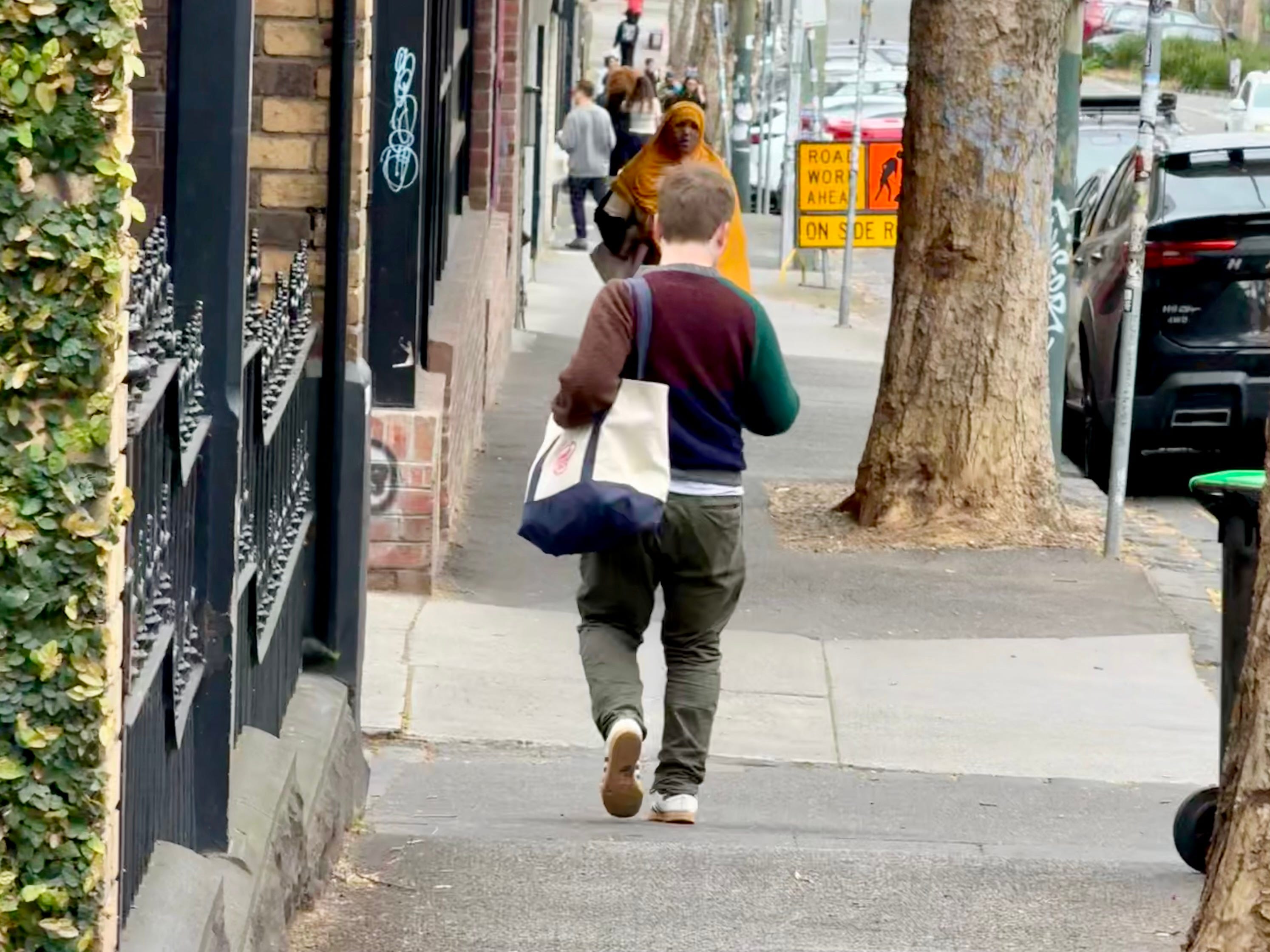
That night made me revisit all the data points that had led up to it. I saw the Trader Joe’s bags in the formerly working-class neighbourhood of Collingwood, Melbourne. Collingwood types love a working-class aesthetic to adorn their multimillion-dollar lifestyles. There’s a beer and wine shop that uses the classic working-class beer, Victoria Bitter, as candle holders, but not for sale—VB doesn’t sit alongside their small-batch craft creations and exclusive vintages. The Trader Joe’s bags caught my attention because they didn’t fit any patterns I knew. The design is intentionally non-distinct. It’s a brand that says you’re a practical, money-conscious millennial who wants affordable, good food.
I first heard about Trader Joe’s from a hard-working artistic couple whose place my friend and I stayed at in the East Village on my inaugural visit. Their fourth-floor walk-up apartment was cluttered and charming, with a loud air conditioner, a sloped floor, and a door that, terrifyingly, would sometimes lock from the inside. We loved it. And of all the East Village landmarks they pointed out, I remember their love for Trader Joe’s most vividly. It seemed odd to love a supermarket, so I took note and made sure to visit. I saw a few more organic items than in other supermarkets, the prices were a little more affordable, but the lines were ridiculously long, weaving through the store. I didn’t buy anything and left.
It was only when I moved to the US, five years later, that it clicked. An upper estimate is that one-third of what’s sold in most American supermarkets would be illegal to sell in Australia. But Trader Joe’s sells mostly real food, and it’s affordable, unlike the high-end Whole Foods. This isn’t a supermarket—it’s a lifeline to people on a budget and dying from food poisoning. But to Australians, it’s a cute tote.
This isn’t a supermarket—it’s a lifeline to people on a budget and dying from food poisoning. But to Australians, it’s a cute tote.
Beef brisket is surprisingly popular in Australian restaurants. It’s made with top-quality beef, a fresh potato bun, subtle sauces, and always with a price premium. I remember sharing my excitement about ordering some brisket in the US, to the bemusement of Americans, looking at me sideways: “Are you sure you want that?” Brisket is usually a mix of the inedible parts of beef, doused in a sugary sauce to mask its taste and texture. It’s only the low-end food of America that makes it to Australia, and in the process, gets a gourmet makeover, making it nothing like the original except in aesthetic: donuts, wings, and even mac and cheese, which will be made with three cheeses, truffle oil, and lobster. It’s all pretend rather than practical.
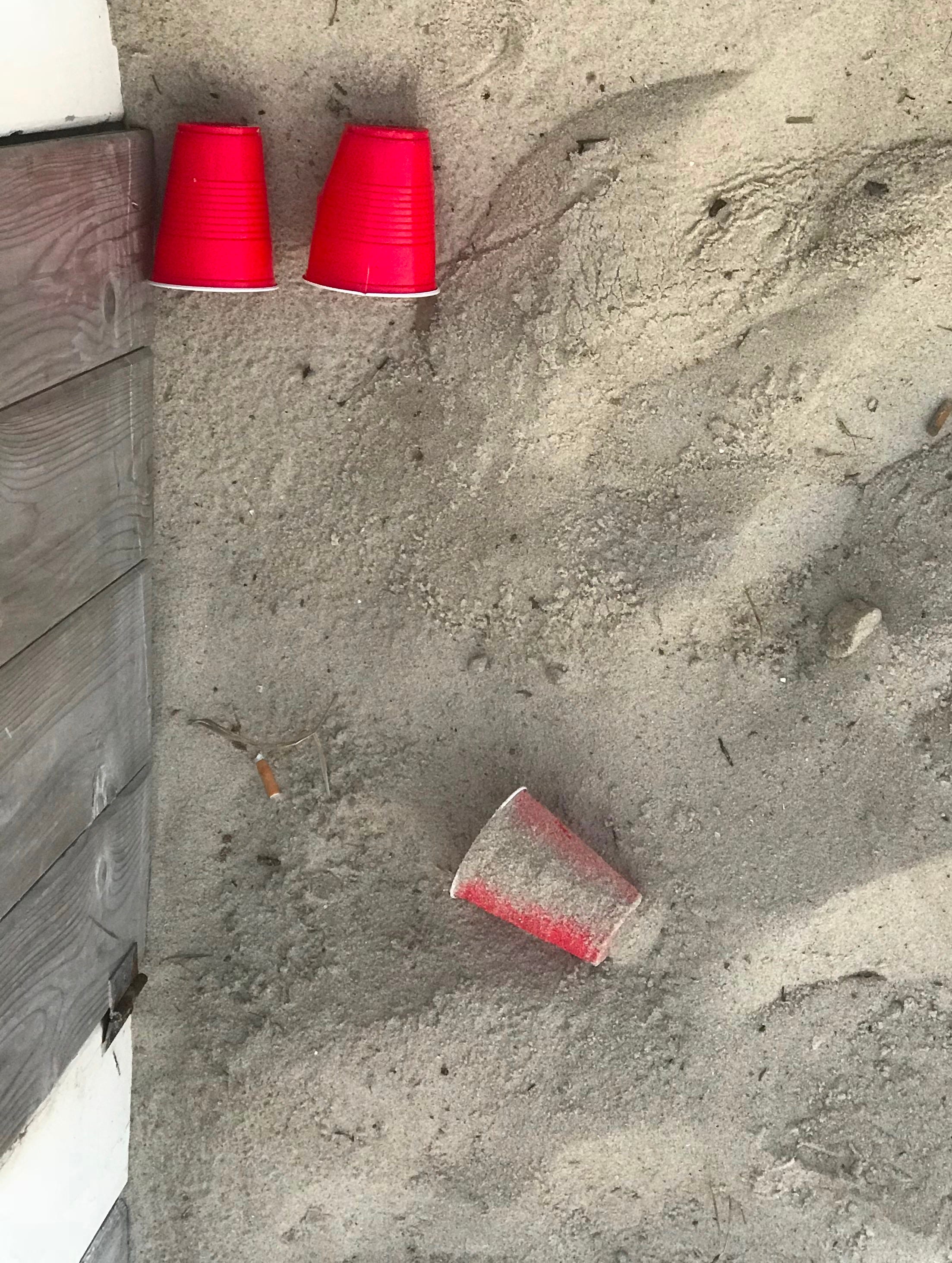
While I question the choices, I’m not entirely above it. My favourite was the red Solo cups. I photographed them in situ often, again to the bemusement of Americans who consider them quotidian or worse, once telling me, “Oh please don’t buy red Solo cups for our multimillion dollar beach house—we have nice cups there already.” I thought that response was odd because the cups are not meant to be ‘nice’ and that’s the point. It’s kitsch. To me, it sounded like saying, ‘I don’t like Warhol because I don’t eat much soup.’
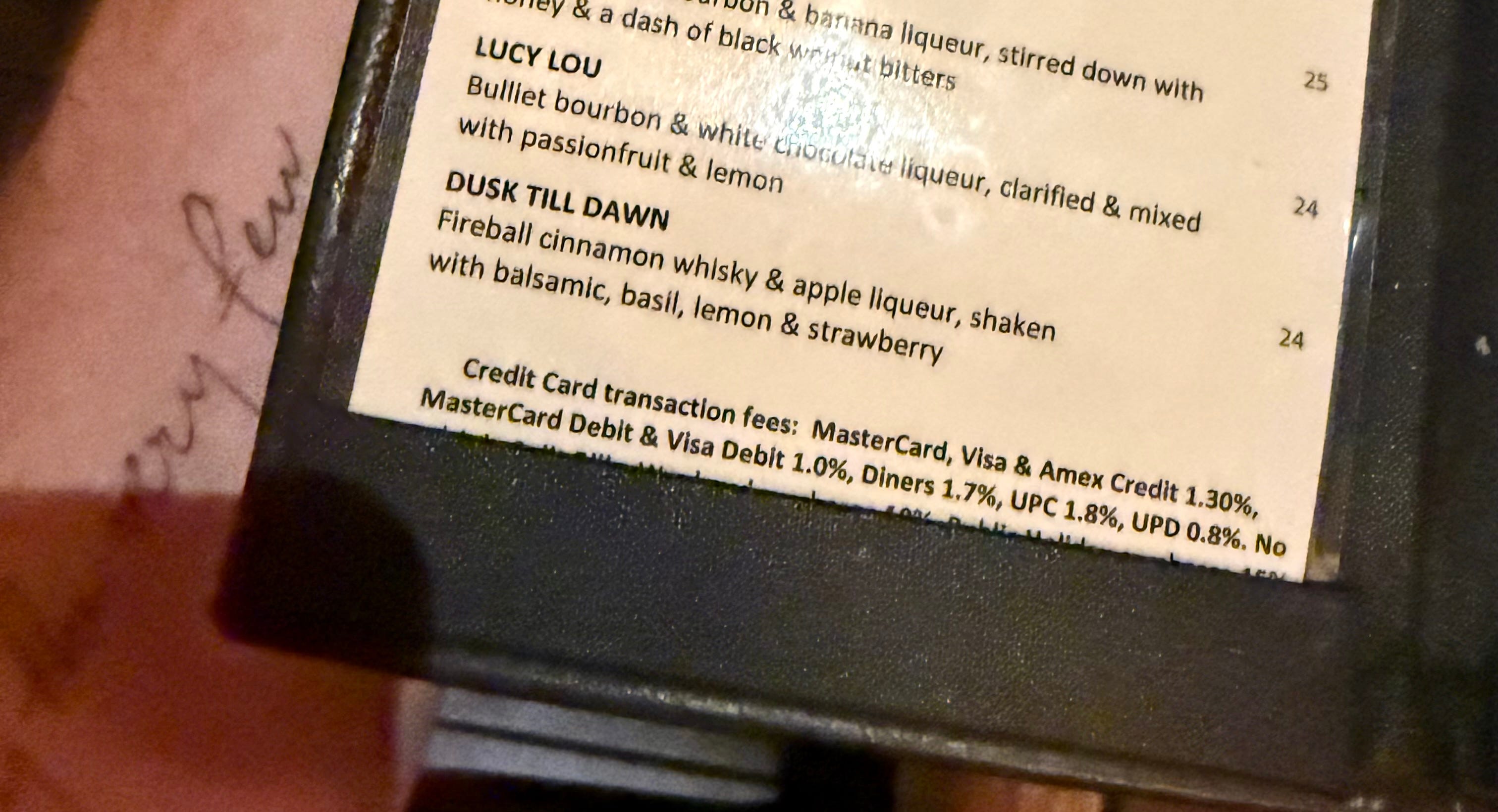
I eventually learnt that Americans were oblivious to all this and started keeping my preferences to myself, such as for Fireball Whisky. It is low quality and mostly a functional way to have alcohol straight without it being too acerbic. It’s what you shot if you haven’t learned how to handle tequila. I’ve seen the little bottles smuggled into bars and downed to save a few bucks on drinks. Meanwhile, Australians can buy a Fireball-branded keg, yours to keep, for $400, “Enhance your home bar with this limited-edition whisky keg,” the seller attests. Or you can buy a one-litre bottle for $100, double the price in New York. Australian alcohol taxes aside, it’s clear there’s a premium on kitsch.
Rich people donning the lower-class aesthetic isn’t new, of course. There’s even a great song about the phenomenon, “Common People,” and I’ve been listening to the William Shatner version while writing this. But it’s rare for an entire culture to get on board with it, and to not like much else about American culture—you can keep your Starbucks.
I immediately enjoyed the grittiness of that first East Village experience, of feeling like a struggling artist, hustling, and imagining making ends meet between Trader Joe’s and dive bars. When I moved to New York, the hustle turned from aesthetic to reality. I began to know intimately friends who kept a brave face and positive attitude despite cobbling together short-term, low-paid work because their artistic profession wasn’t panning out. Or even the corporate hustlers, still counting their coins to build a defensive barrier in the bank in case they lose their ‘at-will employment’ position, which also means losing healthcare, and having to face crushing mortgage payments on top of already crushing student debt. It all made me feel a bit ashamed for initially being, as the song goes, “A Tourist who thinks it’s all such a laugh.”
I became one of those hustlers too, working harder than I’ve ever worked in my life to make it. So to see it back in Australia as an aesthetic while people enjoy the highest levels of wealth in the world, with a median income behind only Luxembourg, it hits differently. I felt gross seeing those one-dollar bills on the floor.
So to see it back in Australia as an aesthetic while people enjoy the highest levels of wealth in the world, with a median income behind only Luxembourg, it hits differently.
Every time I explained to Americans that these tacky things are prized kitsch in Australia, they never quite knew what I meant, and they were right. Because I didn’t know what I meant. We are cosplaying, as a new Canadian friend described the spectacle in the bar. Cosplaying their real struggle, perhaps to connect to something more real in a country with not-real problems. Pretending to enjoy low-quality food, pretending to save money with a cheap drink, and pretending to need tips for healthcare. And again, that song explains it well:
Rent a flat above a shop
And cut your hair and get a job
And smoke some fags and play some pool
Pretend you never went to school
But still you’ll never get it right
‘Cause when you’re laid in bed at night
Watching roaches climb the wall
If you called your dad he could stop it all
A survey by an Australian expat group found that 95% of Australian expats expect they will return to Australia.
That is to say, we could call our dad.
Yeah it’s been hiding in plain sight for so long. Never had it articulated it as such! Such a good read 🙏 If you held a “American themed” party here, it would be interpreted as “tacky and overly confident“. 🥲