

I was so ready to love Brazil. I had in mind what we all have: tropical, beachy, fun and flirty. But I was ready to get to know the real Brazil. What sealed the deal was a chat with my director friend who lives in São Paulo. He’s just so special, and I glanced at my tattoo while considering the visit, “only the very few.” He is one of the very few that are worth going out of my way for.
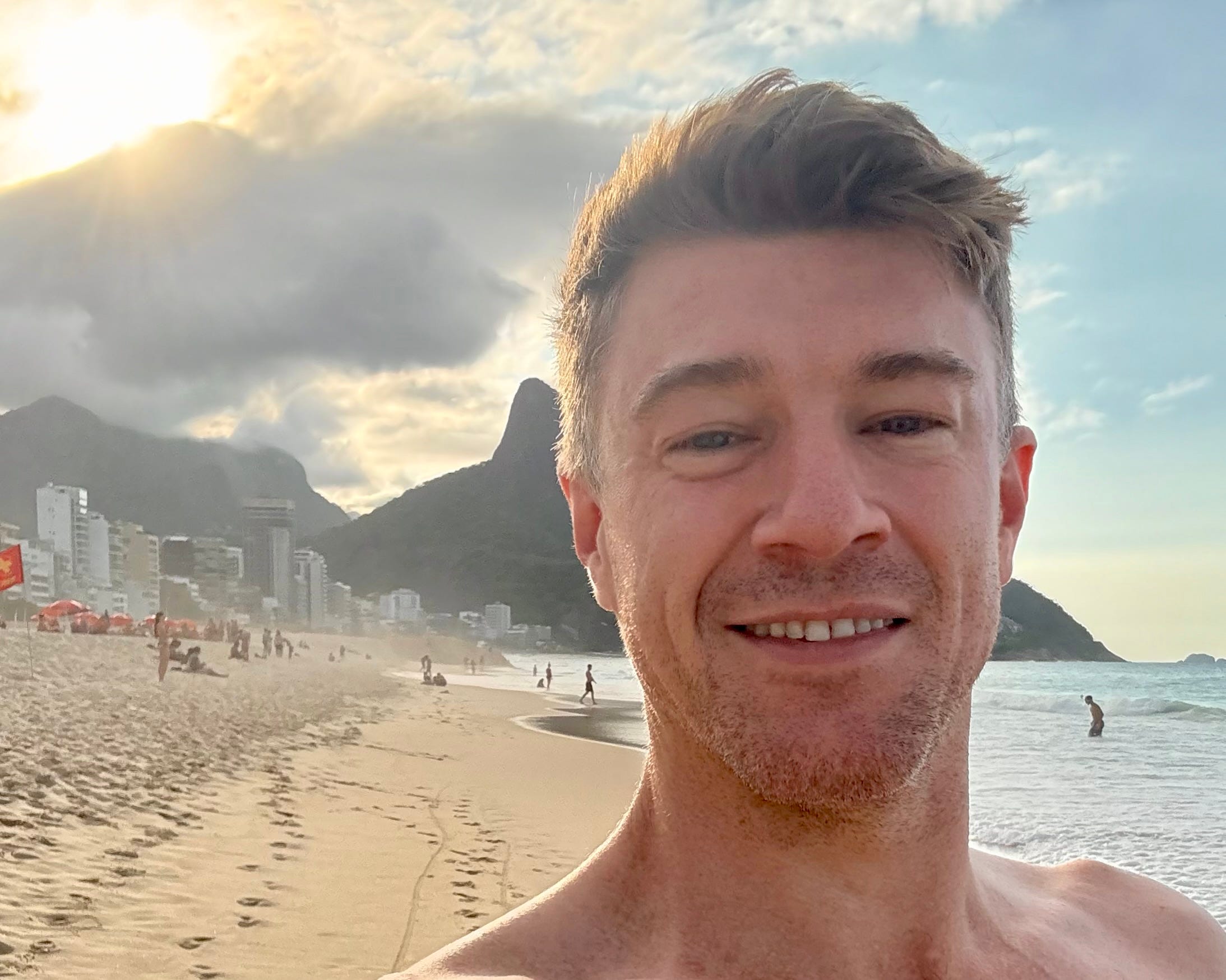
Apart from the positive vibes, I also had on my mind the two big question marks of Brazil: crime and language. I thought I could get tips from locals about the crime, but their advice wasn’t super actionable: ‘Be afraid all the time, be careful about where you choose to go, and never use your phone outside, ever.’ Street crime is bad and there’s an obvious data point that explains it: Brazil’s Gini coefficient is around 52, making it the 9th most unequal country in the world, right up there with South Africa—a place I’ve never wanted to visit for that reason. Secondly, language. Now I knew the fact I was learning Spanish wouldn’t help because I had gotten enough warnings from my well-traveled Latino friend, “More dangerous than the crime would be speaking Spanish in Brazil.” Interactions always went better when I opened with English because there’s a demilitarized value to English. Spanish seems like a value judgment, i.e., ‘you should speak Spanish.’ English just means you’re not from here. This is despite 40% knowing Spanish and perhaps most understanding it. It was only after Brazil that I looked up the stats: English literacy is closer to Afghanistan than Argentina. For an upper-middle-income country, similar to Costa Rica, Türkiye, and Mexico, these two issues feel more like choices.
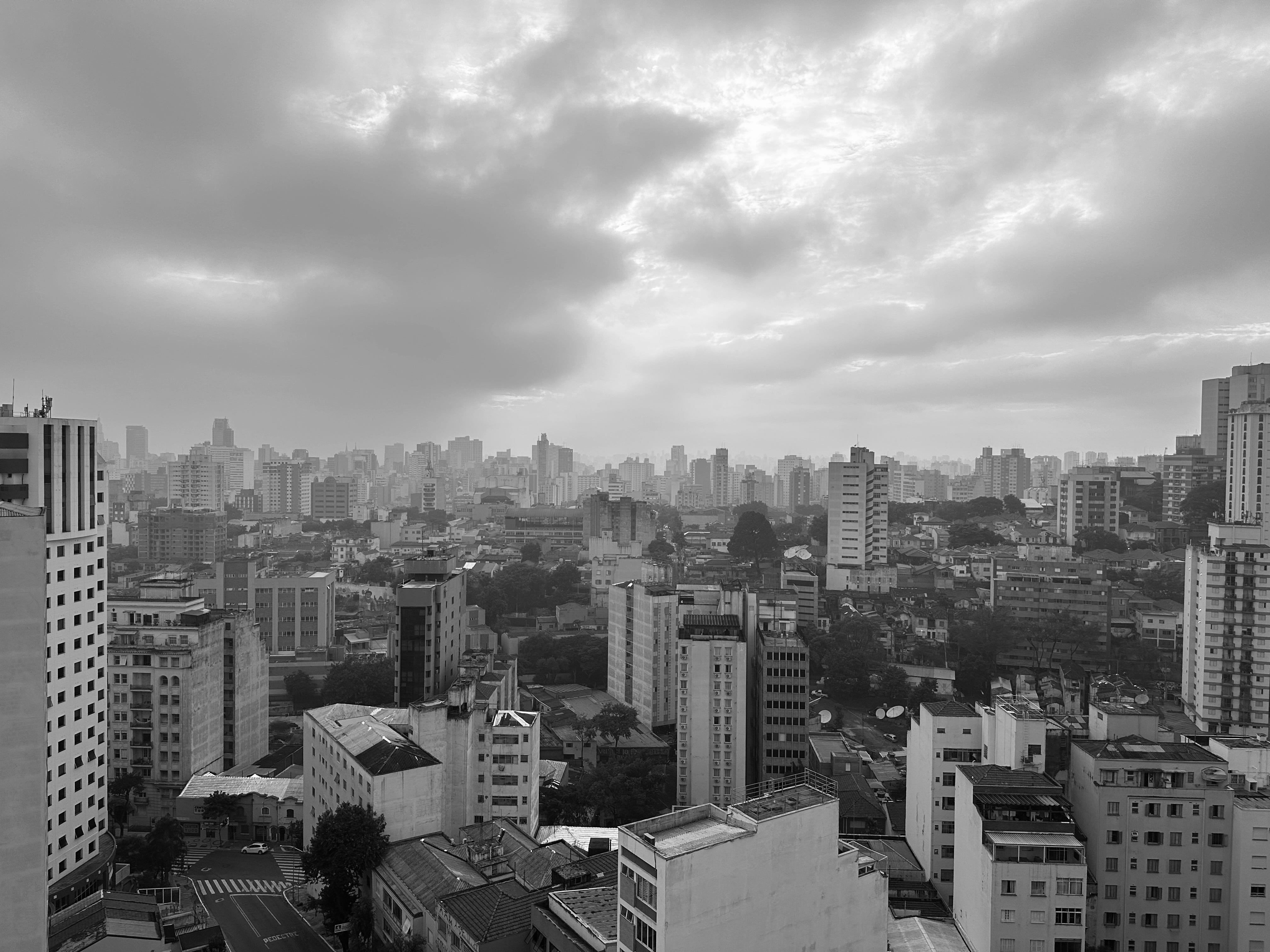
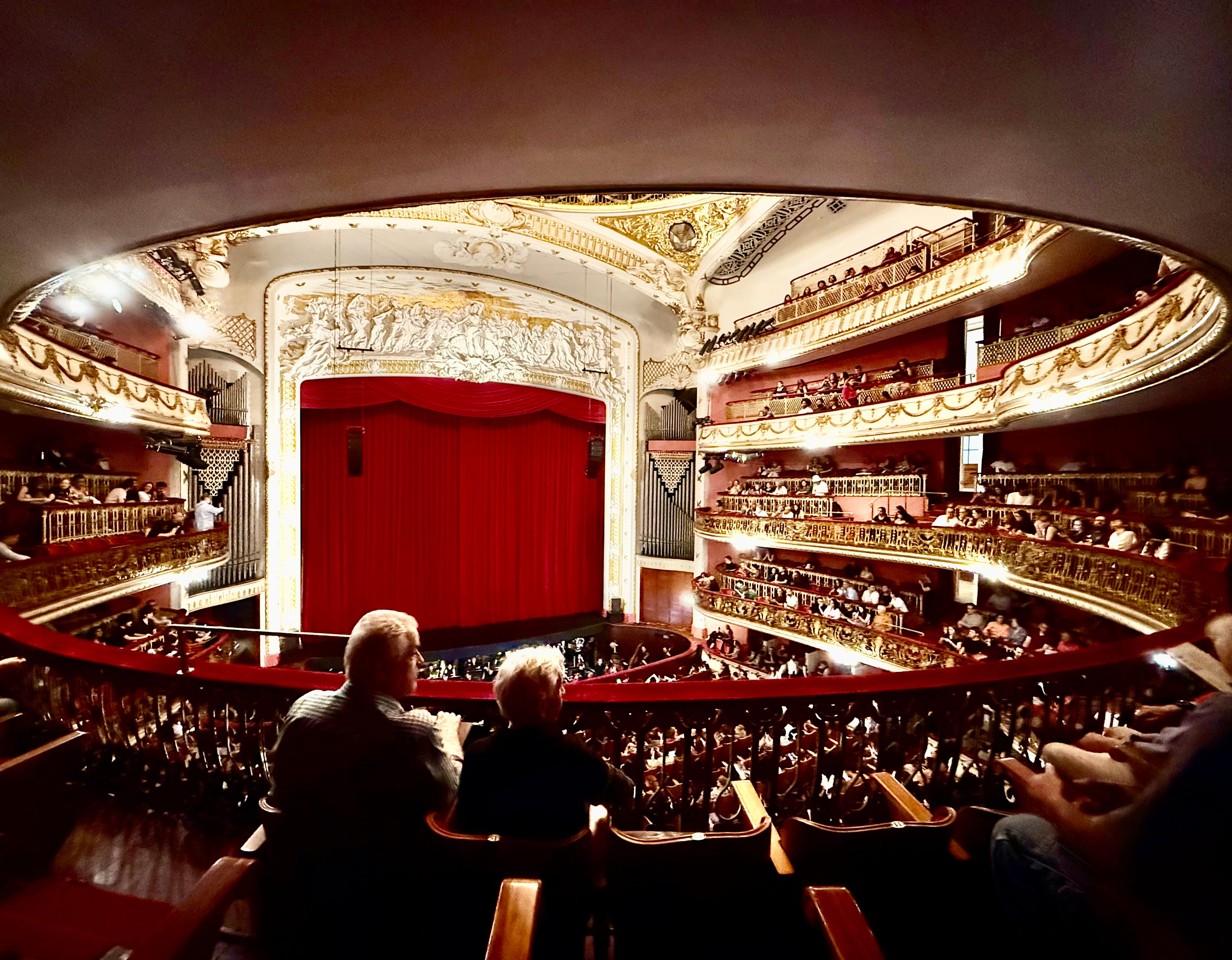
Despite this, I had a strong start in São Paulo. In the first few hours, I met my friend for brunch, and in the first week, I went to a house party, a concert, and even saw contemporary dance at Teatro Municipal. The concert was Filipe Catto singing the classics of Gal Costa. I never knew of Costa, but damn, she seems like a ballsy warrior for love. I was translating as much of the lyrics they was singing as possible, just so eager to soak up this beautiful world I had been let into. My friend was laughing at me as I tried to make Google Translate work. The final song was a magical moment, with Catto belting on repeat the iconic words of Costa, “eu sou amor da cabeça sos pés,” as they sauntered through the crowd (“I am love from my head to my toes”). I’ll always remember that aggressive declaration of love, and the physical act of being one with the crowd, and turning gazes away from the stage and toward each other, underscoring the point of connected love.
The contemporary dance, Réquiem SP, was probably my first indication that Brazil is working through some stuff. It was a sophomoric performance with a fairly simple narrative about digitally-induced malaise and anonymity in a big city, or at least that was my interpretation. The signature moments were a live deconstruction of the stage between acts, with carpenters tearing up norms (get it?) and a motorbike ‘breaking in’, as the streets break into the hallowed hall (again, get it?). It received critical acclaim, and someone explained that the contemporary style was a major divergence for the conservative institution.
In that context, I feel terrible for my review, but I’m no Gal Costa, and I lose my love quickly if you force me to sit still through two hours of labored points.
Once you start to think about Brazil as a conservative country, the high inequality and the bilingual reluctance make a lot more sense. It’s no wonder they have a former president who was the ‘Trump of the Tropics’, the strictest bans on abortion in the region, hyper-macho culture, and their most iconic symbol, Christ The Redeemer, that is actually a statement of intolerance. It was built as a pushback against the newly secular constitution, a proverbial middle finger to the modern revolutionaries. Knowing that, I can’t unsee the statue as less of an embrace of people and more of an institutional domination. I never visited and don’t care to, especially as I would be feeling the anxiety of Instagrammers trying to capture a serene solitude moment.
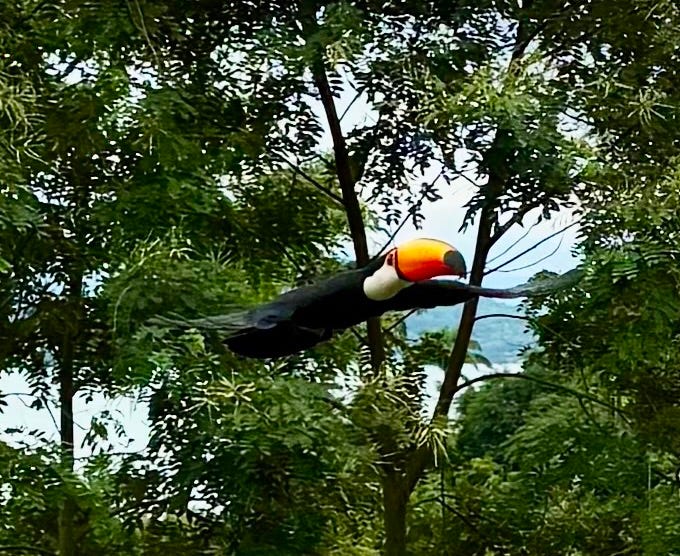
After São Paulo, I visited Paraty on the way to Rio. It looks like a UNESCO town because it is a UNESCO town. It has cobblestone streets set below high tide so they are washed daily by the ocean (which might have made more sense in an earlier time, when there was more organic waste), beautifully preserved little cottages, and candle-warm street lighting at night that brings an historical glow. It’s terribly touristy, but this is the kind of tourist place where you’re like: I get it, and I can just avoid the shops selling beige-white everything with seashells. My Airbnb was up on a hill overlooking the rainforest and just a 15-minute walk from the town. I arrived to see a toucan chilling outside my shower window. I thought, ‘Wow, toucans by my window every day!’ But I never saw a toucan again. I think they really avoid humans.
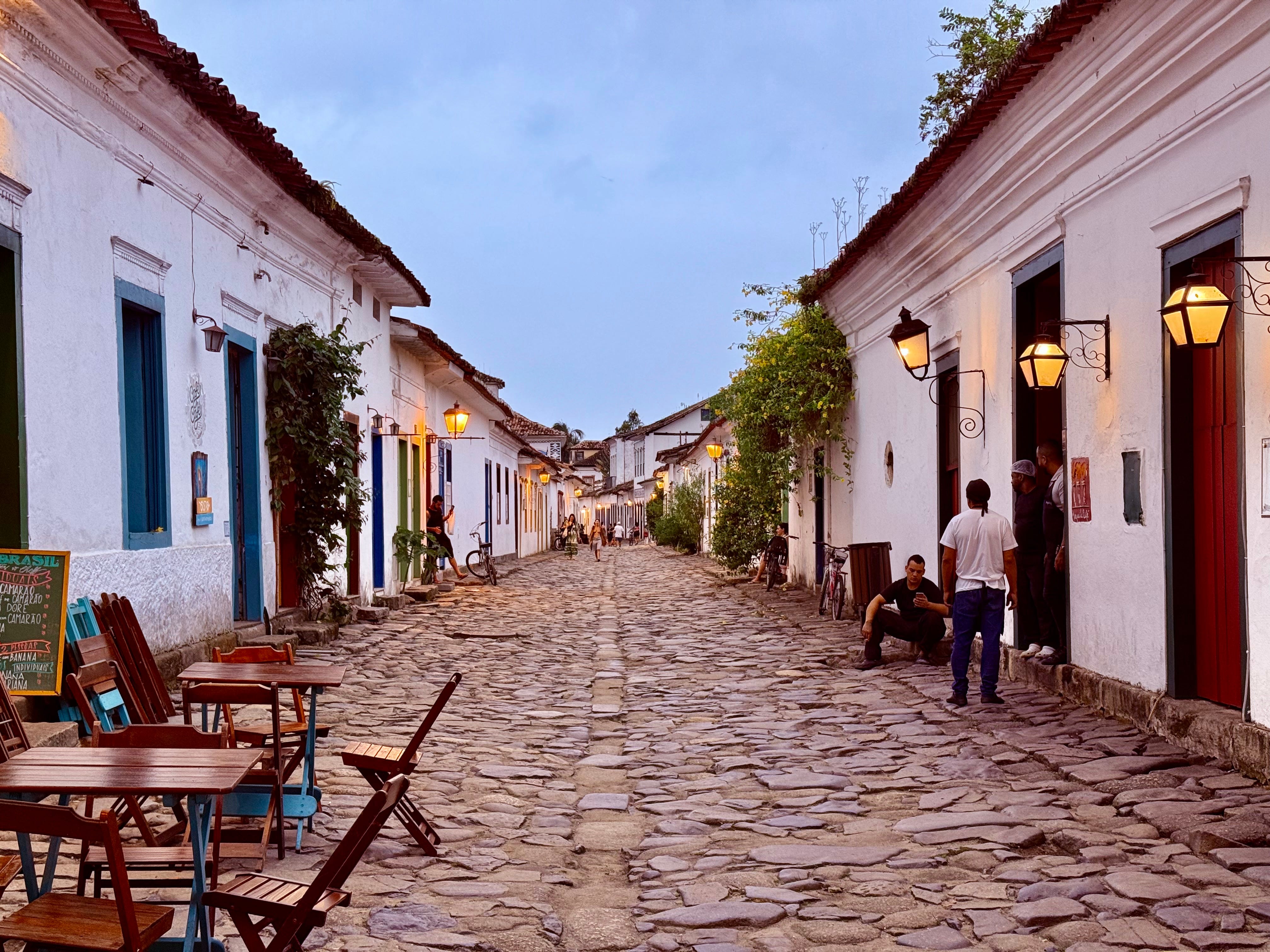
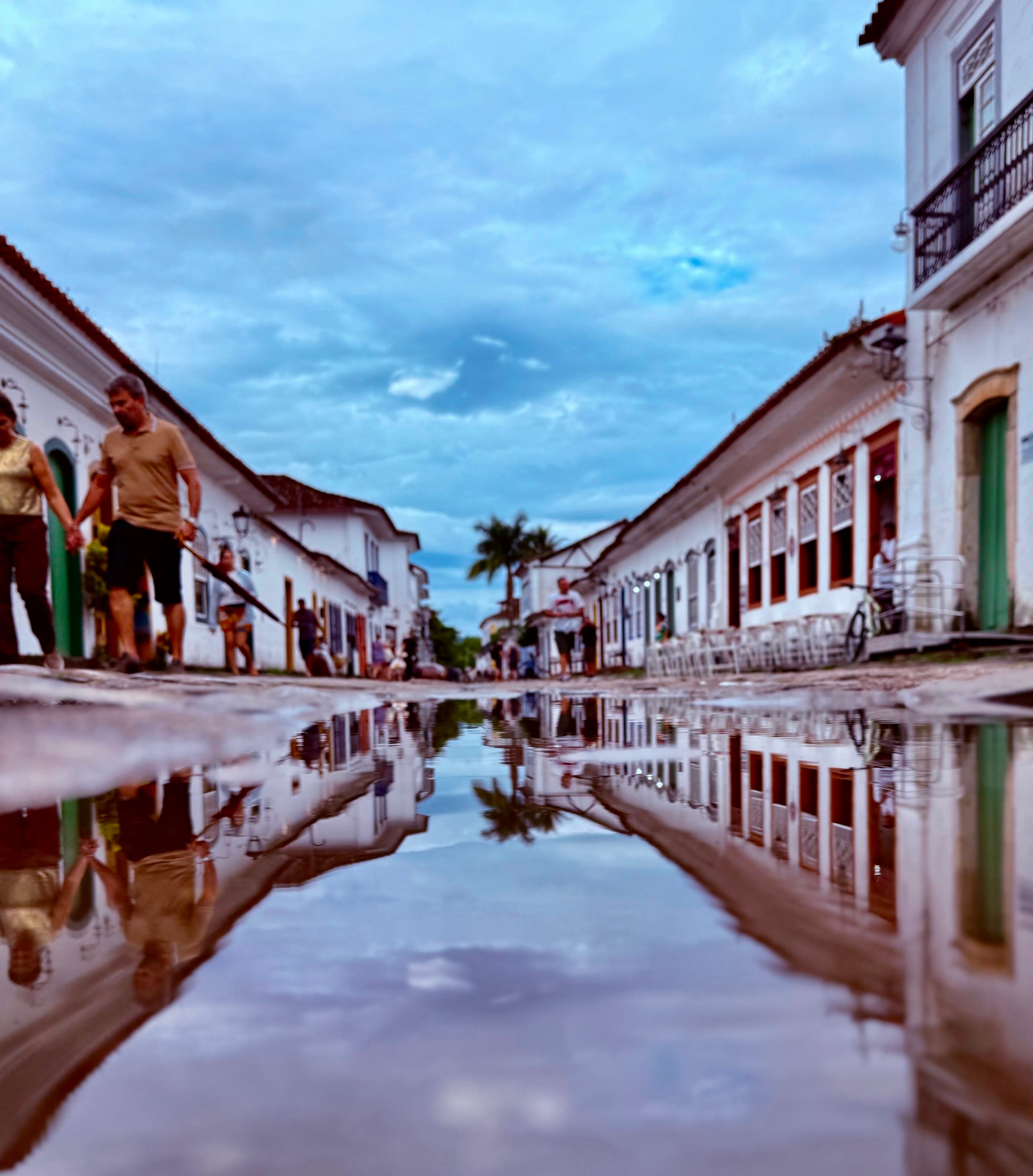

The best thing about Paraty is the harbor full of old-timey boats that take you off to little gold and jade bays for the cost of a New York cocktail. I took a boat ride right after a client call and felt very cheeky that I was able to pull that off. I would say that at least half of the eighty passengers were Brazilian, based on their reactions when the announcement came over first in Portuguese. So Paraty is touristy but a little more real than my next destination.
I had been warned particularly about how unsafe Rio is, and so that may not have put me in the best mood. When I arrived, I was unnerved at the bus terminal, with taxi drivers yelling and honing in on me as the clearly-not-from-here guy. I finally realized I had to respond as they weren’t taking body language for an answer, “No! Leave me alone! I am not interested.” And the woman scrunched her face and said, “Calma!” Which isn’t “calm” like a meditation teacher, it’s “calm down!” But more accurately translated as, “You’re the problem.”
Rio was hard to crack for someone like me who is desperate to get to know a place, so much so that even my playlist changes—I love this messy and relatable song about cachaça:
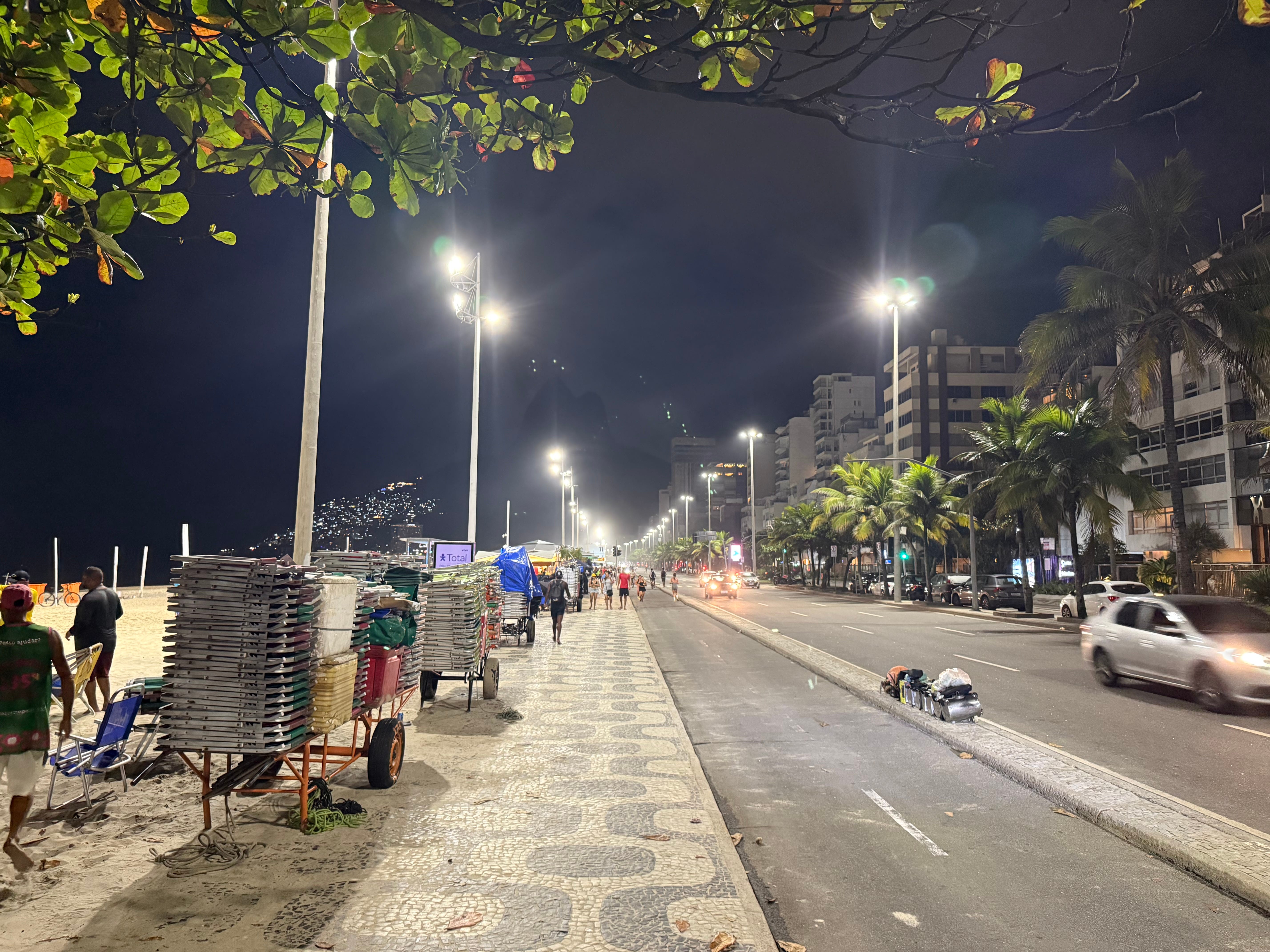
Unfortunately, Rio wasn’t very relatable. The beaches felt inauthentic as if the music and scene were curated to fit what a tourist thinks Brazil is. I walked past cabanas with hardcore techno at sunset while people sat at tables eating in silence. I found a restaurant called Bossa Nova, but they weren’t playing any music, making it feel sad, like they were exhausted by tourists asking “What the hell is this music? Where’s the techno?” I tried the gay bars but Silêncio was always heaving with people that I wouldn’t know where to squeeze in, and open at odd times that didn’t line up with Google Maps. Another gay bar, Tau, had space, but the crowd was just young straight people and confused tourists who had seen the same reviews I did, listing it as the top gay bar. Nothing seemed to make sense.
It’s not a place to be by yourself. I didn’t do any hikes, which I had hoped to do, because all the advice said not to be alone due to the crime. I was also cautious about where I traveled in the city, again, due to the crime.
I had a few friends from New York put the feelers out about coming down. I wish I had taken them up on that. The reason I didn’t is that I like traveling by myself because I have an intense need to take care of people around me, to the point where I lose focus on what I want to do (don’t worry, I’m working on it). Besides, my ADHD-induced extroversion means I can meet people easily. But when I can’t, it’s surprising and the loneliness hits hard.
I did do some exploring with a Canadian woman I met on a tour in Paraty, bonding over homosexuality and ADHD (the first one she knew, the second one I told her). We had dinner and walked along Copacabana to find something real. We sat in front of some loud and terrible live music and were offered wildly overpriced drinks from a criminal wandering the beach—not a judgment, he was wearing an ankle bracelet.
Since I didn’t get anything stolen from me, even when I casually pulled out my Thief Phone in Lapa (a Thief Phone is a phone you don’t care to get stolen because it doesn’t have your bank details and it’s not expensive), I wonder if the crime advice is overblown for someone like me who has traveled the world, has gay hyper-vigilance, is clinically over-attentive, and is from New York. A Brazilian said, ‘I’d never visit New York—it’s too unsafe,’ so I said, ‘Yes, exactly, that’s why I know how to stay safe in Brazil.’ He disagreed, ‘You won’t, it’s too unsafe.’ I’m not sure that this makes sense. I also heard about a tour guide who wanted to teach a tourist a lesson by taking her bag when she left it on a stool. I wonder if he knew how alert she was and she just didn’t expect her tour guide to steal her bag. The alarming is so common that even after a month in Brazil, my barber thought he should tell me to be careful with my phone.
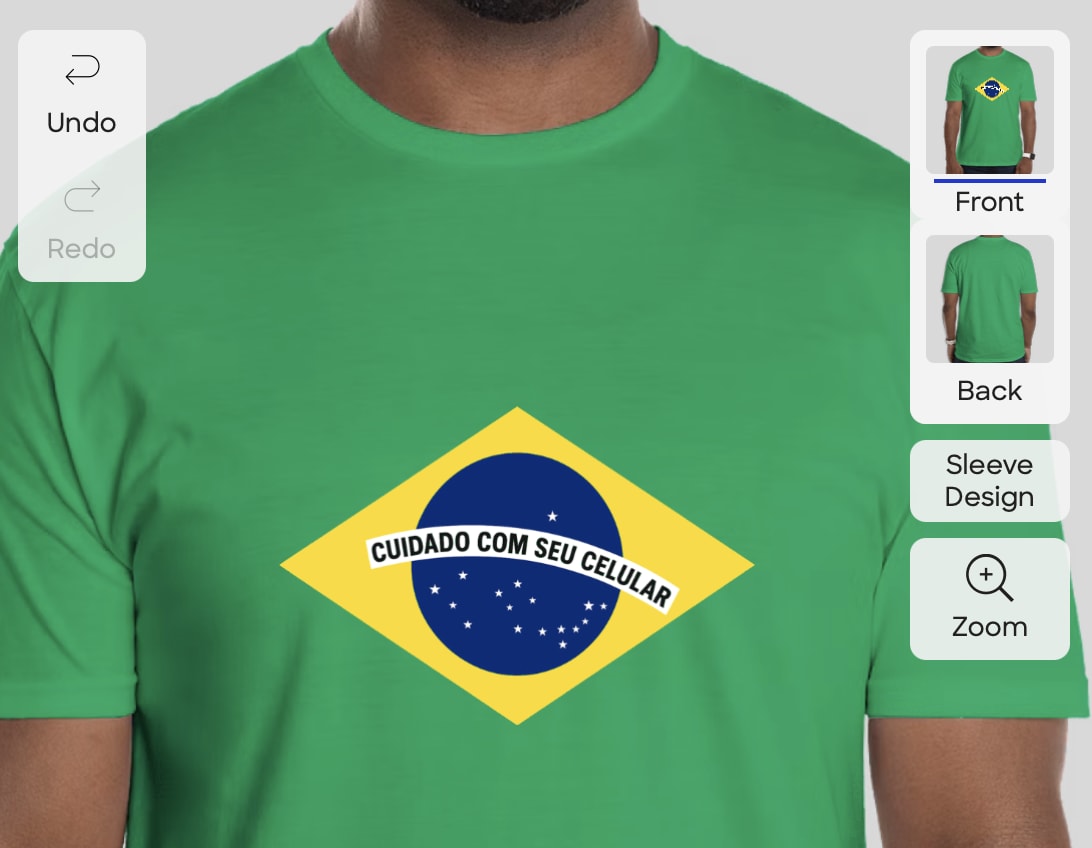
Instead of “careful with your phone,” which I would like to get on a t-shirt so I never have to hear it again, my advice is tangible: hold your phone like a wad of hundreds, because that’s what it represents. Most stories I've heard about foreigners having their phones stolen seem a little obvious, which makes me think that these simple mistakes are a result of exhaustion from constant alarm. It’s like terrorism advice in the early 2000s: be alert, not alarmed.
I probably could have turned around my experience in Rio if I had done a mental reset and tried again to make friends. What destroyed my momentum was a case of seasonal diarrhea that comes around so predictably you can set your watch to it. And Brazil is not a place you want to have diarrhea: every toilet can’t take toilet paper. A friend visited a TED conference 10 years ago and got a briefing on crime for an hour, but had to learn the hard way about toilet paper with a blocked toilet in his official hotel. And in a cruel twist, all the paper is flimsy half-a-ply; either have great paper and don’t flush it, or have flimsy paper and do flush it. But Brazil chooses to have the worst of both worlds, and you know the reason is that they are hedging their bets and assuming some amount of paper flushing.

Leaving Rio, I was able to reset and think better of Brazil. Salvador really helped. It’s a city that wants you to know how much self-respect they have with all the carefully tended details of tidy and colorful streets. I was amazed at the warmth, when not just a car but also a motorbike stopped for me and gave me a thumbs up instead of a hurry-up gesture. I thought for a second if I would need to get cash out for the local currency here (I really did think that for a microsecond). I made friends at the gym and online, and went out dancing in clubs and chatting in bars and restaurants. It makes me think that, while the north is famously different from the south, this is so dramatic that maybe it’s the tourists to Rio that make the locals close off.
But I still kept running into language barriers. Even in welcoming Salvador, I would often say “não entendo” (“I don’t understand,” not that I ever mastered the ã sound), but they would repeat what they said and often add more verbiage. A pharmacist asked three or four times if I had the national identification number, CPF (pronounced “see pee effy”). By itself, I could’ve understood. But since I had no idea what she was saying, it would’ve been safe for her to assume I’m not Brazilian.
I realized in Argentina what I was missing: the over-emphasized facial expressions to supplement verbal communication. The smile that means “yes/welcome”, widened eyes that mean “can I help”, and the squint that means “don’t understand.” In Uruguay, too, a cashier asked about the identification card and I sheepishly said “no entiendo”; she chuckled, nodded, and we moved through the transaction smoothly. Brazilians are not a very non-verbal culture, perhaps because their language is quite descriptive, which I’m sure gives clarity in verbal communication.
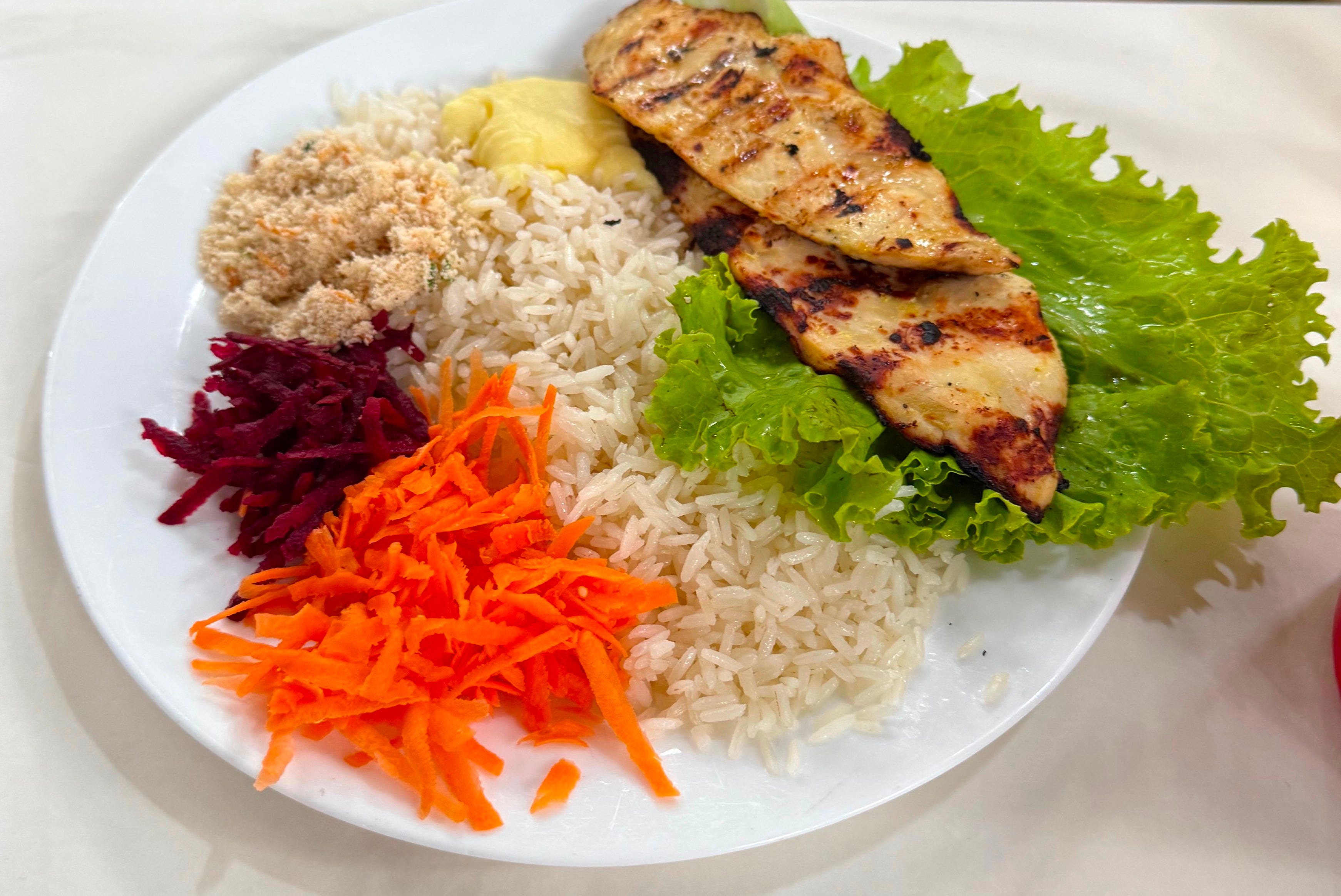
Another big difference with Argentina is the food, which unlike Brazil, is light, flavorful, green, and healthy. I.e., modern. I don’t eat red meat, and it’s comical how every time I say, “I don’t like Brazilian food,” the response is, “Do you like meat?” They’re well aware they have one card to play. They also like their fried dough and cheese, such as Pão de Queijo, which is quite cute. It makes me think there’s conservatism in food too: the health food trends haven’t hit yet.
My lack of love for Brazil is surprising to people who have visited with Brazilians, which makes all the difference: being an insider versus an outsider, and I experienced both. Because there are two types of people who visit Brazil: those who absolutely love it, and those who don’t speak Portuguese.
Quite interesting point of view.
great observations!