

A month ago, I returned to live in Australia after 8 years in New York, and none of the time have I had second thoughts. An hour after touchdown, I was on a ferry on the most beautiful harbor, truly glistening in the crisp “winter” sun, and I couldn’t believe how lucky I was to be here. I made my way to the top of the ferry, along with a group of fit cyclists, coffees in their hands, no doubt part of a regular regime on this commuter ferry—and they still wanted the best views like me. I sat next to a lone tourist, probably American, who was playing it cool until we pushed back and she fumbled for her phone, almost caught off guard with how beautiful the scene was. For the first time in a long time, I realized this isn’t a dream place but more real than any of the grit, grime, and sometimes unkind New York and US.
Message to friends after a few days back in Australia
The whole time I kept thinking, ‘Why haven’t I been here?’ I wanted to find fault in the place, but all I found was something I couldn’t fault in myself: Seeking out a challenge for growth and change.


It’s all the little niceties that can pass unnoticed but bring about a cumulative kindness in yourself and others. Like gliding through international customs in minutes without any yelling. To the sparkly clean elevators taking you to the station directly under the airport. To the quiet train, also sparkly and with space to sit, that gets to the city center in 15 minutes for 15USD. To the classic exterior and modern interior of the ferry to Manly, with smiling deckhands, dispositions no doubt aided by their six-figure salary. And when I arrived in Manly at a cafe, The Pantry, chosen by my parents mostly for its beach view, the food exceeded most breakfasts I had in New York. The irony is that I was initially frustrated not to go to Ruby Lane, which was the cafe recommended by my friend who used to live here. I remembered that most random cafes here are, at worst, equivalent to the best in America.


What you put in your body is the most dramatic shift. The tomatoes, kale, and bread taste unlike any I’ve had in the US, except at the most expensive restaurants—those where they have their own farm-to-table supply chain costing $100 plus per meal. Eating food in Australia is like when Willy Wonka says, “And the strawberries taste like strawberries!” I forgot how delicious everyday food can be. The keyword being ‘everyday’: Everyday food, everyday coffee, everyday vistas.
I discussed my love of bread with a personal trainer friend in Sydney, expecting judgment, but he said Australian bread is fine, and that American nutrition advice—such as being down on bread—is sometimes not relevant. It’s easy to find less processed bread, and sugar-free is standard. I flashed back to my astonishment when I arrived in New York and couldn’t find sugar-free bread unless I dug through Whole Foods. Weirdly, Australian bread tastes sweeter, which makes you realize that the added corn syrup is hiding some other deficiency. For Australians visiting the US, I always warned them to only visit Whole Foods, as it’s almost as good as a bog-standard Australian supermarket.
It’s not that everything in Australia is better than everything in America; it’s that the minimum is higher, which is what most experience. Rich people floating between countries and only buying expensive things would barely notice a difference. I remember complaining about American chocolate making me sick to an Australian in her high-ceiling, pre-war DUMBO penthouse, and she paused and replied, “I haven’t experienced that.” It hit me: She wasn’t eating Hershey’s. She was having Lilac from the West Village.
Back in Australia, I was preparing to have a friend over and went to the Australian default: European cheeses and crackers. I knew the cheeses, but I forgot which crackers were the best. And then, duh, they were right there, the ones everyone gets, the second-cheapest, and they would be the best an American would buy at Westside Market.
Breakfast time in Avalon
In the seaside village of Avalon in Sydney’s far north, I opened Google Maps to search “Coffee, Top Rated, Open Now,” but it was another ‘duh’ moment: Any cafe I wander past is phenomenal and would be better than the best of what I’m used to. I’ve had an anxiety-inducing amount of flat whites, but I don’t care. I missed the everyday ease.
If America and Continental Europe had a baby, it would be Australia. In the 20th century, Australia, like much of the world, turned to America as the future (specifically since 1942 when the country felt abandoned by its former ‘great and powerful friend’, Britain), while at the same time importing Continental Europeans at a rapid rate under the doctrine of ‘populate or perish’. For the first time in 150 years, the overwhelmingly Irish and English descendants, sequestered at the end of the world, were being exposed to new cultures. Despite the usual racism that accompanies such influxes, they were embracing changes with gusto. I believe it’s for this reason that the Italian, Greek, and French influences have stuck, as has the habit of embracing the culture of newcomers. (Fun fact: Australian English uses more French words than British or American English, with ‘thongs’ being the most alarming example.) Facets of cultures from subsequent waves from Asia, and more recently from Latin America and Africa, have become mainstream in a way few other societies tend to absorb. It’s not a patchwork of cultures in Australia; it’s a tossed salad.
There are glimpses of America and Europe everywhere. The highways of Sydney evoke those of America, while the cutesy metro system of Melbourne, with its royal blue, evokes that of Paris. The smaller cars are European. The skyscrapers in the city centers are American. The artistic, designer train stations are European. The big beer barns are American. The cutesy cafes are European. The outdoor, rugged lifestyle is American. The joie de vivre attitude—the point of life is to be enjoyed—is European. It’s American casual with European conscientious quality. Or as Americans would say, peanut butter and chocolate.


I’m aware I’m going to the best places to inform this feeling in the first month. Manly is one of Sydney’s best beaches. Avalon is near where Nicole Kidman holidays. And Surry Hills, where I stayed with a friend, is the best inner city neighborhood in Sydney. So these places aren’t everywhere in Australia, but they are somewhere, and that’s the difference.
The best of America gets close, but they’re not as accessible and not as good. Whether it’s Montauk, Park City, West Hollywood, West Village, East Village, Williamsburg, Fire Island Pines, Castro, a Nashville mansion, or Rhinebeck—all places I’ve stayed or lived. I’m comparing apples, both big and small.
In talking about how great Australia is, I’m less concerned that Americans would find it too gushing than I am Australians. Australians are reluctant to believe how great they have it, citing cost of living, low wage growth, high house prices, and diminishing professional opportunities. However, none of these are unique to Australia, and I like that they’re at the top of agendas. For instance, Sydney is pushing an aggressive housing development program unlike anything seen in its history.
The future is here: Driverless metro in Sydney
But I can’t fault Australians for continuing to complain rather than celebrate, because rejecting ‘good enough’ creates better.
I remember an American friend 10 years ago in Sydney, preparing for an argument with a group of us Aussies with the declarative, supposedly revelatory statement, “Wifi is really not good enough here, guys. I’m sorry. But it’s not.” We were confused by his politeness: Of course it wasn’t. Australians were well aware of the dismal comparisons with other countries and had been complaining about it for years. The complaining resulted in a national government initiative, with some success.
Australia has derisively, and later proudly, been called “The Lucky Country.” But Australia has been known as ‘lucky’ for almost three-quarters of a century now. Eventually, you have to wonder if there’s something else, like being ready to be lucky. I certainly feel ready to be lucky again.
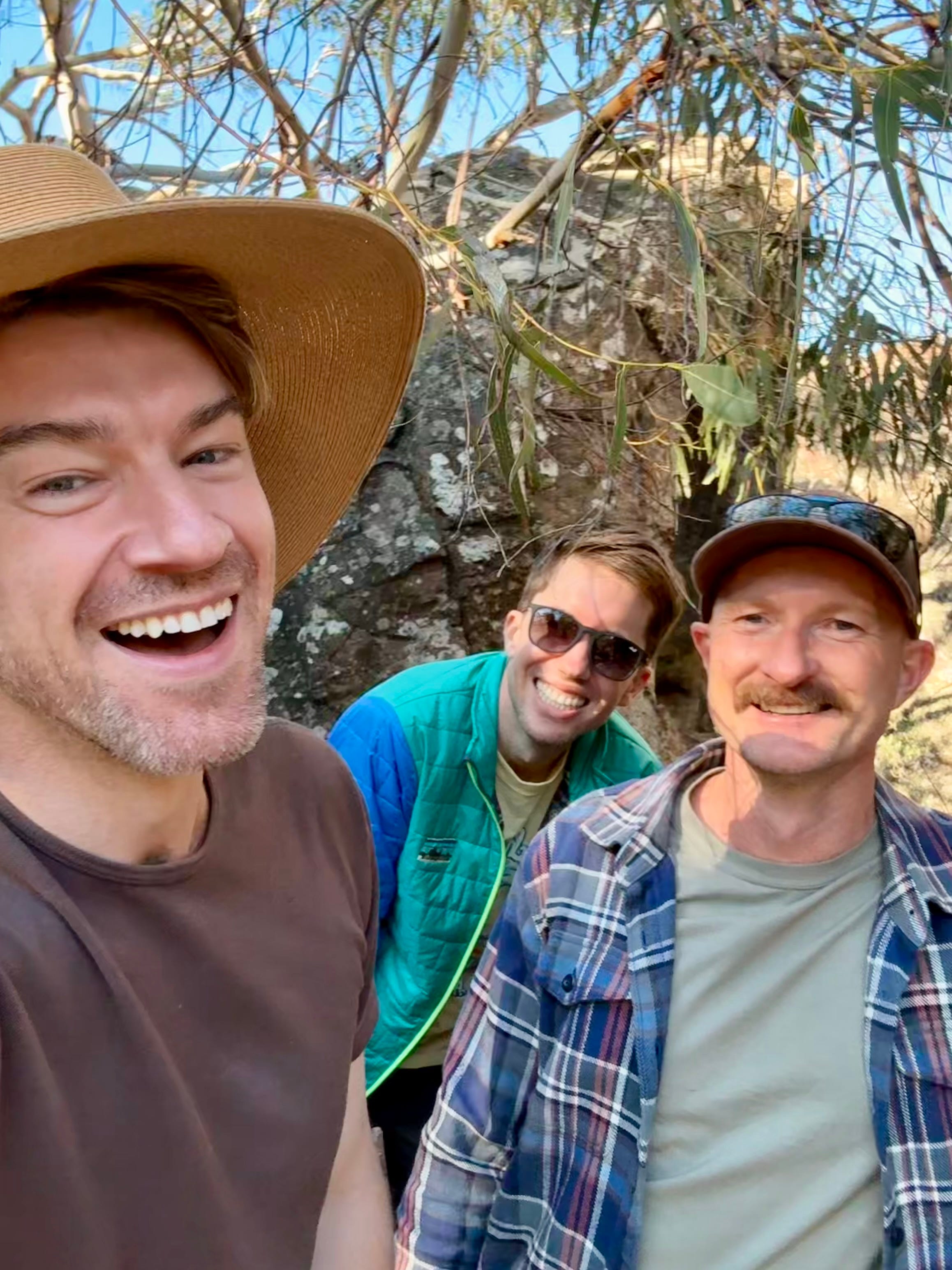
💯 all the reasons I fell in love with Sydney 11 years ago and now call myself Aussie. Welcome home. 🩷🇦🇺