

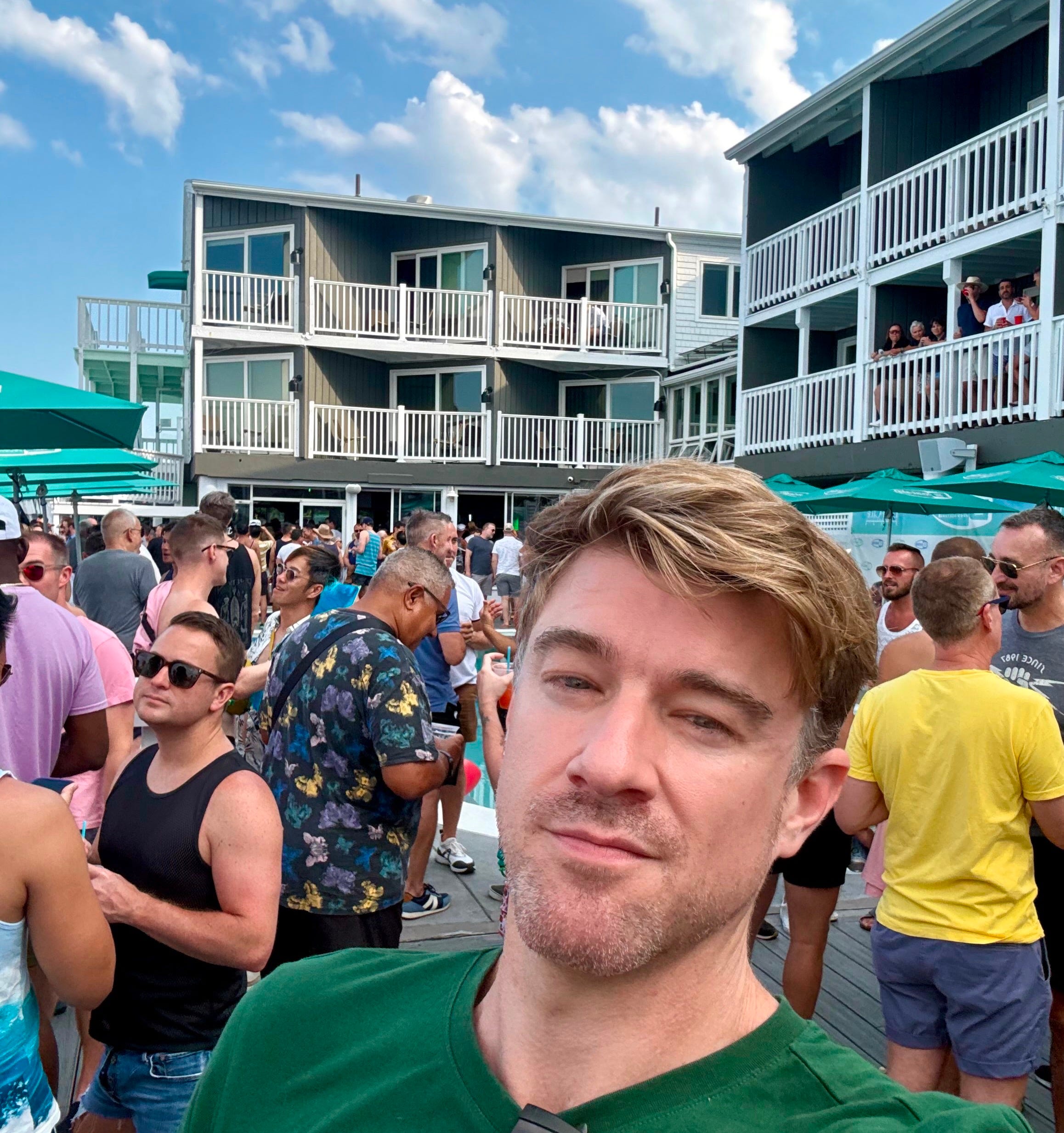
I’m writing from a poolside in Provincetown in front of a sea of men’s chests, either lounging, bobbing in the pool, or standing and scanning the scene, looking for people they know or want to know. I’ve decided to follow ‘the schedule’ a little more closely today, which consists of the Provincetown Inn pool in the day, the Boatslip harbor bar in the afternoon, and the almost-circuit party of the Gifford Hotel after dinner. Although I’m not following the spirit of the schedule, writing rather than looking to meet or make friends, which I believe is okay, although I’m not sure many do.
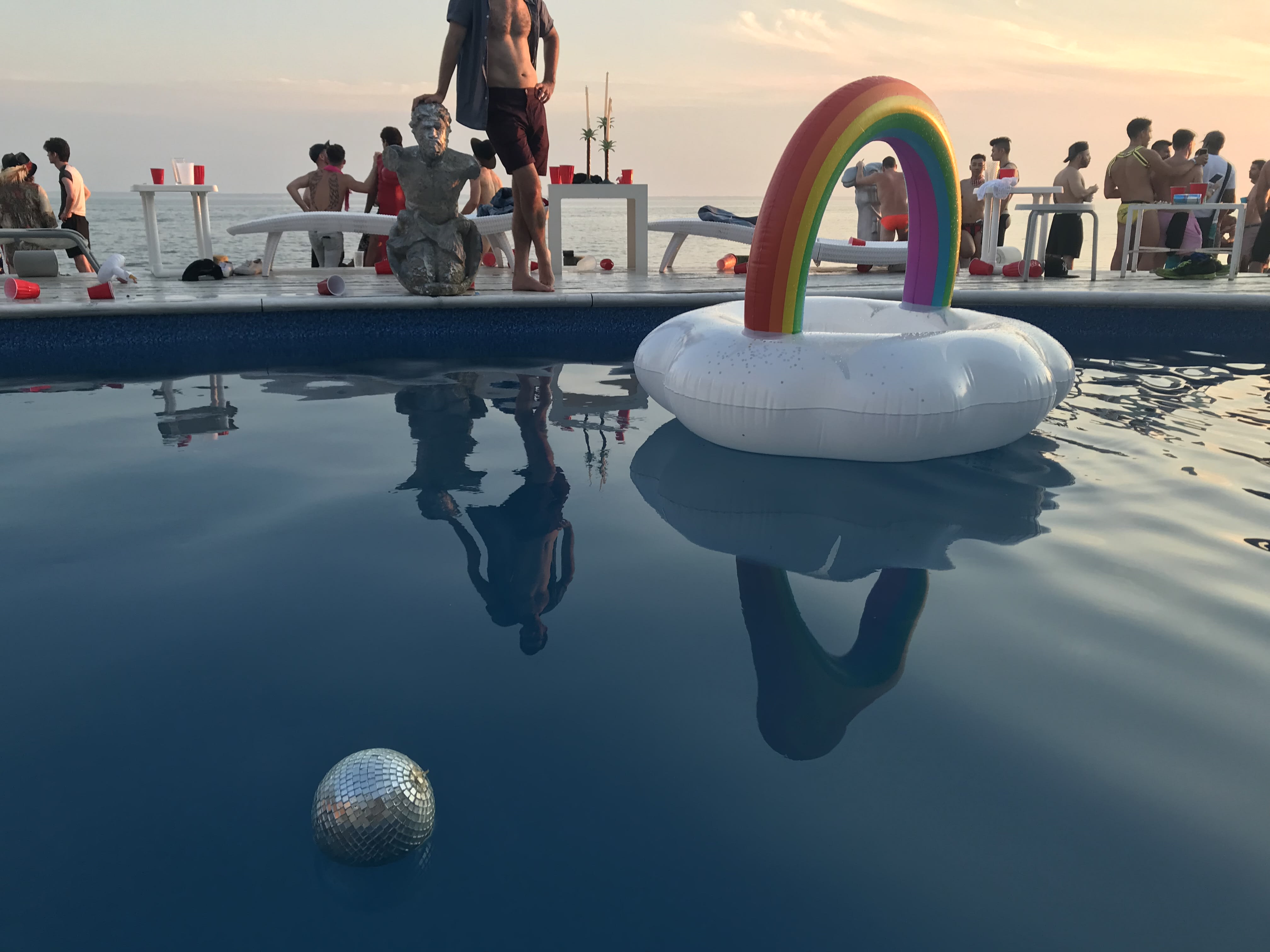
A nurse told me recently, “This treatment is great for young people.” I asked, “Is that me?” She laughed, “Of course! You’re young at 40. In healthcare, you’re either young or old.” Things are either growing or dying. I love the gay holiday towns of Provincetown (the Boston one) and Fire Island (the New York one), still, it’s clear they’re in the ageing sequence, going against the tides of culture, economics, and actual tides—in 10 years, Fire Island will require regular evacuations due to total inundations and Provincetown will need prohibitively expensive infrastructure upgrades (extreme climate estimates, yes, but those have been more accurate in recent history).
I first visited both in 2013 and have been back almost every summer since moving to New York in 2018. I even went to Fire Island for my first summer when I didn’t have ‘a share’, making it so expensive that I could have gone to Paris for less. But it was all the reasons I was in the U.S.: open, social, stimulating, and where the unexpected is just around the dune.


Going alone, I had a couple of moments of loneliness, but looking back at the photos, you’d assume I went with a group. I discovered a house party, “Reflections”, which I now know was essentially a public party, albeit one where you were expected to bring your own drinks. I didn’t know and didn’t, thinking that spirits are so cheap here compared to Australia that, of course, people would buy a bunch and share for free. Luckily, no one called me out for making drinks with someone else’s vodka—and mixers. I found someone staying at the house and thanked him for hosting, and he mentioned, to my surprise and delight, that this party always becomes naked, just a bit later. So hyped by how open and easy conversations and coming together were here, I thought, ‘Why not get that started?’ It was one way to make friends, literally being the one naked person in this 50-person party. Eventually, others joined, but not all, and I would later realize that this place brings out a lot of insecurity.


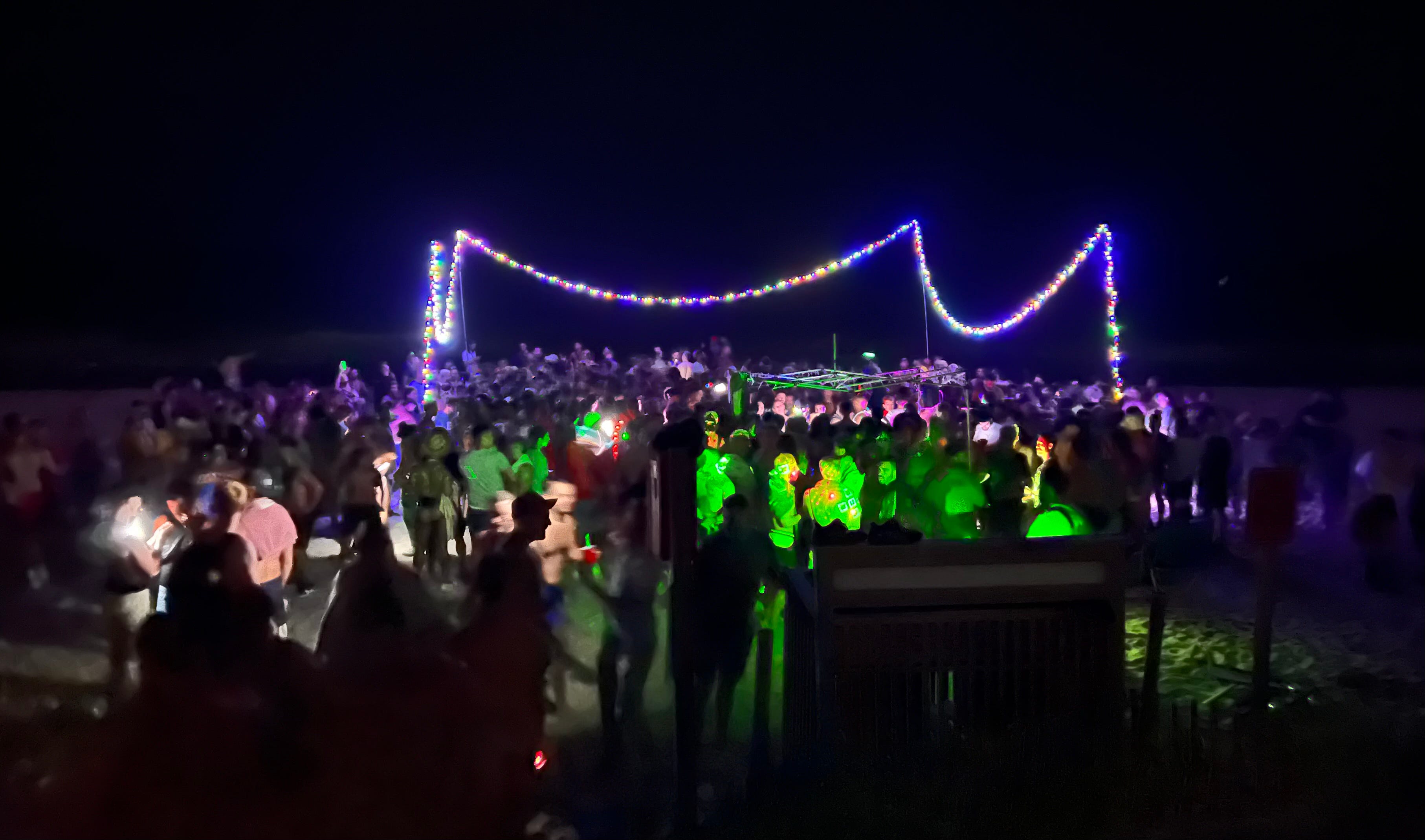
Plopping myself in these situations to overcome being alone doesn’t always pan out so well. My first night out on this visit got off to a rough start, but it was also filled with fascinating moments. My inclination was to make my way from the more developed, exclusive, and superficial side of The Pines to Cherry Grove. I had a preference for The Grove, having been introduced to it first, and it was the side with more women, inclusivity of all types, and just a little more warmth in the sea air. I made my way through the woods that divide the sister settlements, and usually, you stumble across a lot more salacious activities, but this night, I stumbled across a beach party with a DJ and colored lights dancing across the shrubbery. It was pretty magical to not know about this scheduled full moon party and see it manifest before me like I was inside a Midsummer Night’s Dream.
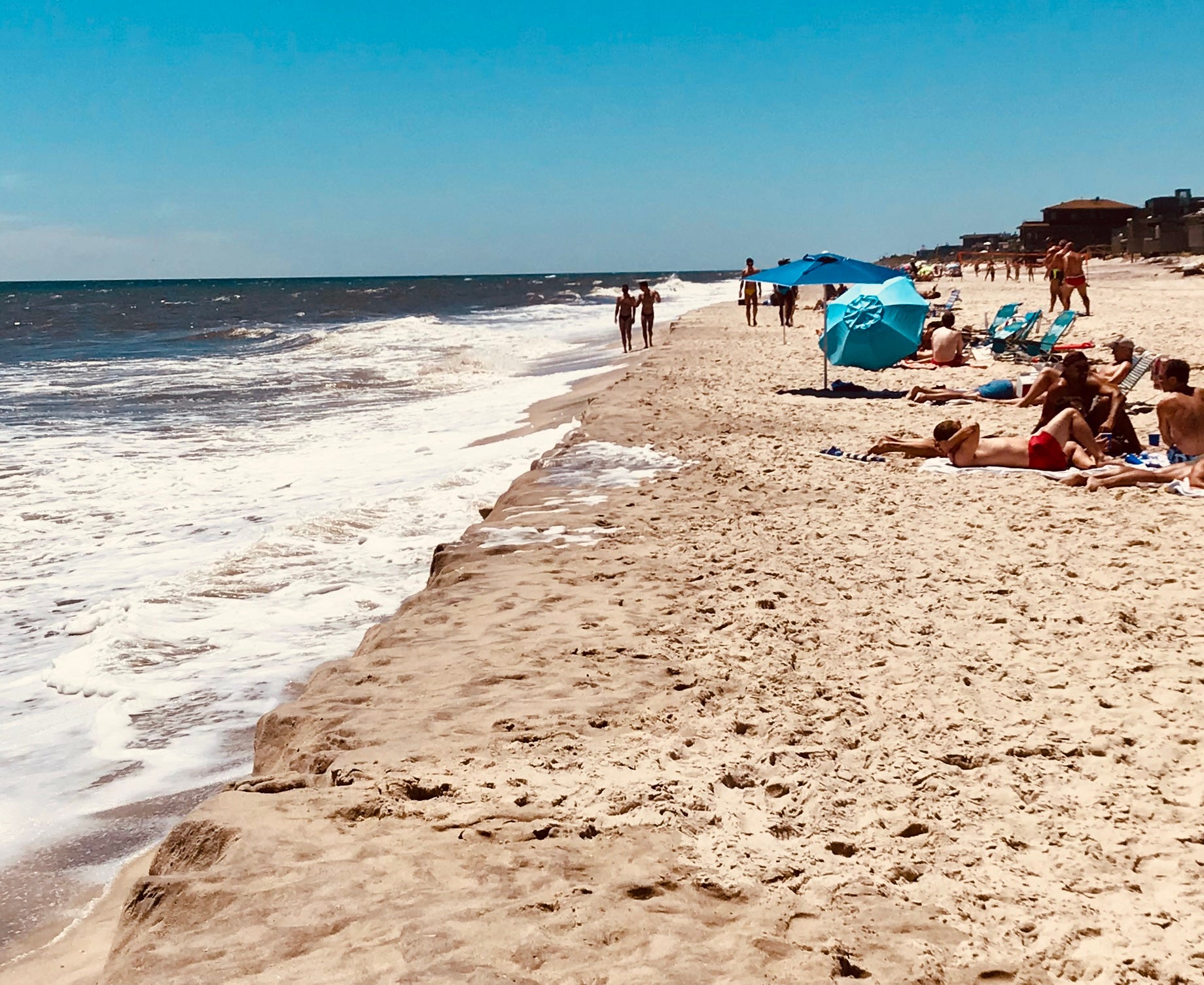
I found someone standing on the edge and said hello. We shared our love for Fire Island, but he added, “It’s the best beach in the world.” My loneliness is never more important than facts, so I said, “Really? I guess it’s good for New York.” The Fire Island beach is narrow, the water has a steep drop-off, meaning there isn’t much space for splashing around, the swells can be unpleasant, and the North Atlantic current rarely makes temperatures inviting. He doubled down, “No, it’s the best.” I think my accent was stronger then, but I thought I should clarify, “You know I’m from Australia, right?” I tried to find our commonality and reflect what he meant to say, “But the community here is the best, and I love it for that.” He didn’t agree, “You must be homesick.” I either assume he didn’t find community here (he was at the edge of a party), or it was American hyperbole. This latter one always catches me because Americans keep escalating their superlative arms race. I didn’t realize “the best” doesn’t mean singular; it just means “very good” (imagine my surprise when someone called me their “best friend”). Even so, the beach is not ‘very good.’
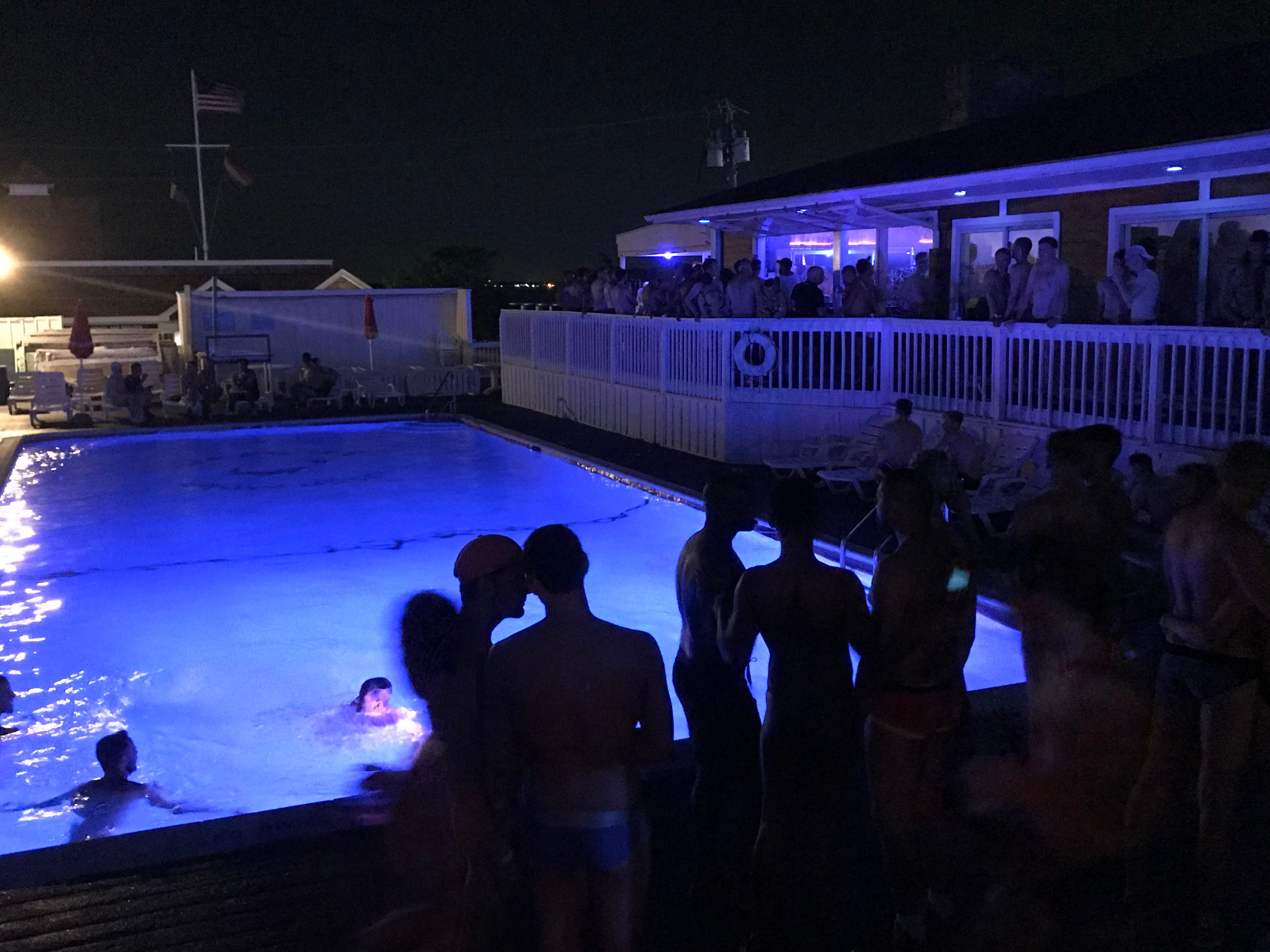
Failing that connection, I moved on to a heaving dance party at the Ice Palace, meandered through, finding no place to stop, let alone connect, so I retreated back to my expensive room in a shared Airbnb. Turns out, it was their regular Friday night Underwear Party, and so I started with the most challenging, exposing environment possible. Still, sometimes, my confidence surprises me and is a no-show.
I was by myself because, while I had already made friends in New York after 6 months, none would include me at such late notice—these groups are vetted and organized around October the year before, such is the scramble for accommodation across the two settlements that amount to 1.5 square kilometers (0.6mi2). At a house party shortly after I arrived in New York that year, I remember a conversation over a kitchen counter where I said to a new acquaintance, “I’d love to be part of a house on Fire Island,” and he sneered in response, “Ha! Well, you can’t just be part of a house—you need to be invited, and that’s very exclusive.” I decided to burn that friendship right there.
By 2021, I was hosting my own share house and bringing my misfit friends, some of whom were New Yorkers who had never visited, which is surprisingly common among natives. When asked, they say they’ve never had a group organize a visit, which says there’s no motivation, and I’ve tried to investigate why. Some admit to having negative impressions formed early, along the lines of “superficial, sex-obsessed,” which is not wrong, but also hard to separate from homophobia (hot tip: straight people are sex-obsessed too, they’re just less effective).
I’ve formed and solidified countless friendships over the years through these places, mostly at the in-between moments of getting ready, coming home, or recovering on the beach. It has the key ingredient for friendship formation, which is repeated, low-intensity interactions through proximity. Sociologists have documented the decline in these kinds of community occurrences and tie it to greater social decay and loneliness. Online communities are a great addition, but the science is in: they’re not enough by themselves, and these facsimiles of community are deceptively dangerous empty calories. However, physical community spaces are not a given for connection, as Jeremy Atherton Lin points out in “Gay Bar.” It's not inherent, and the fact that it seems inherent belies the effort required.
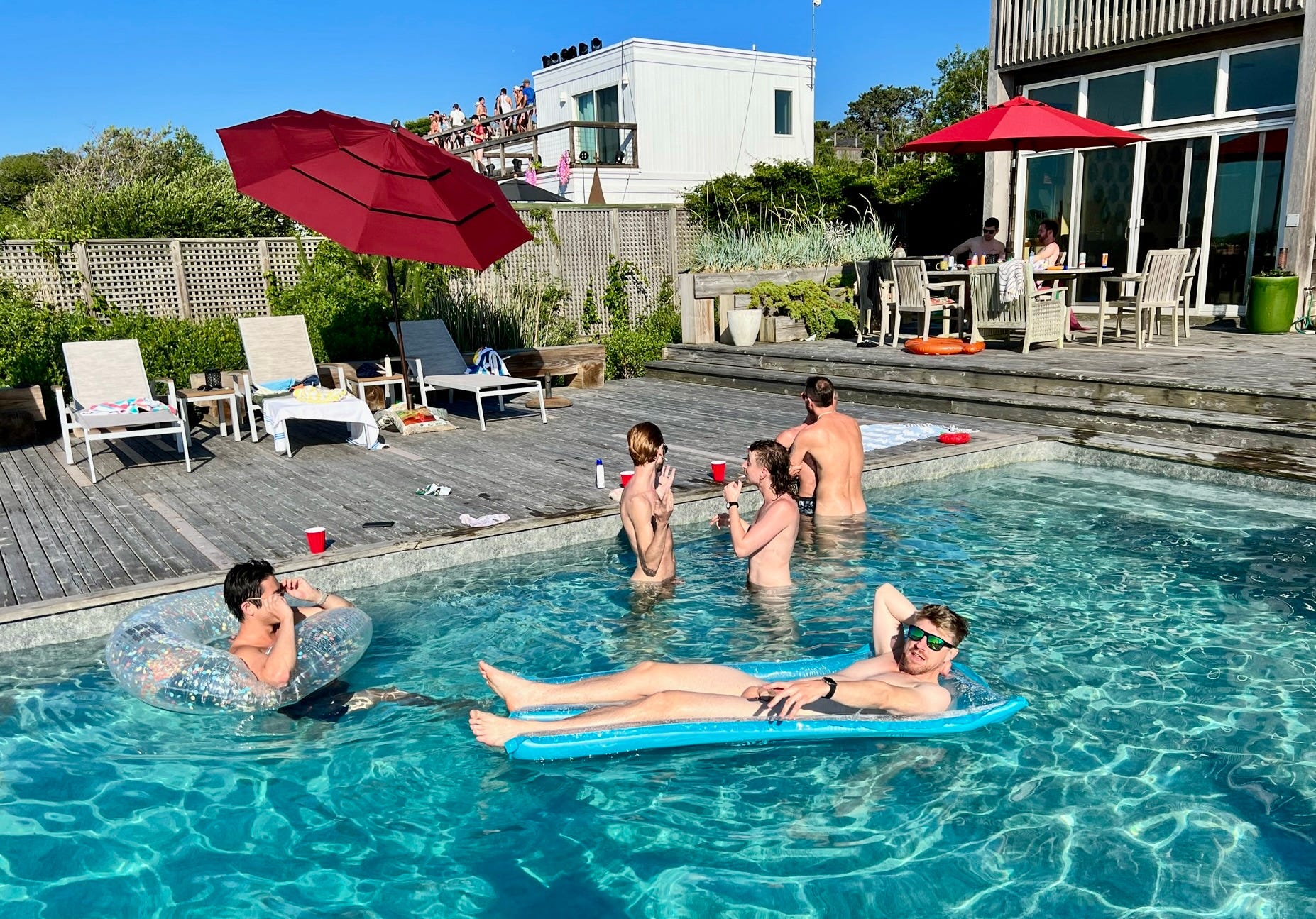
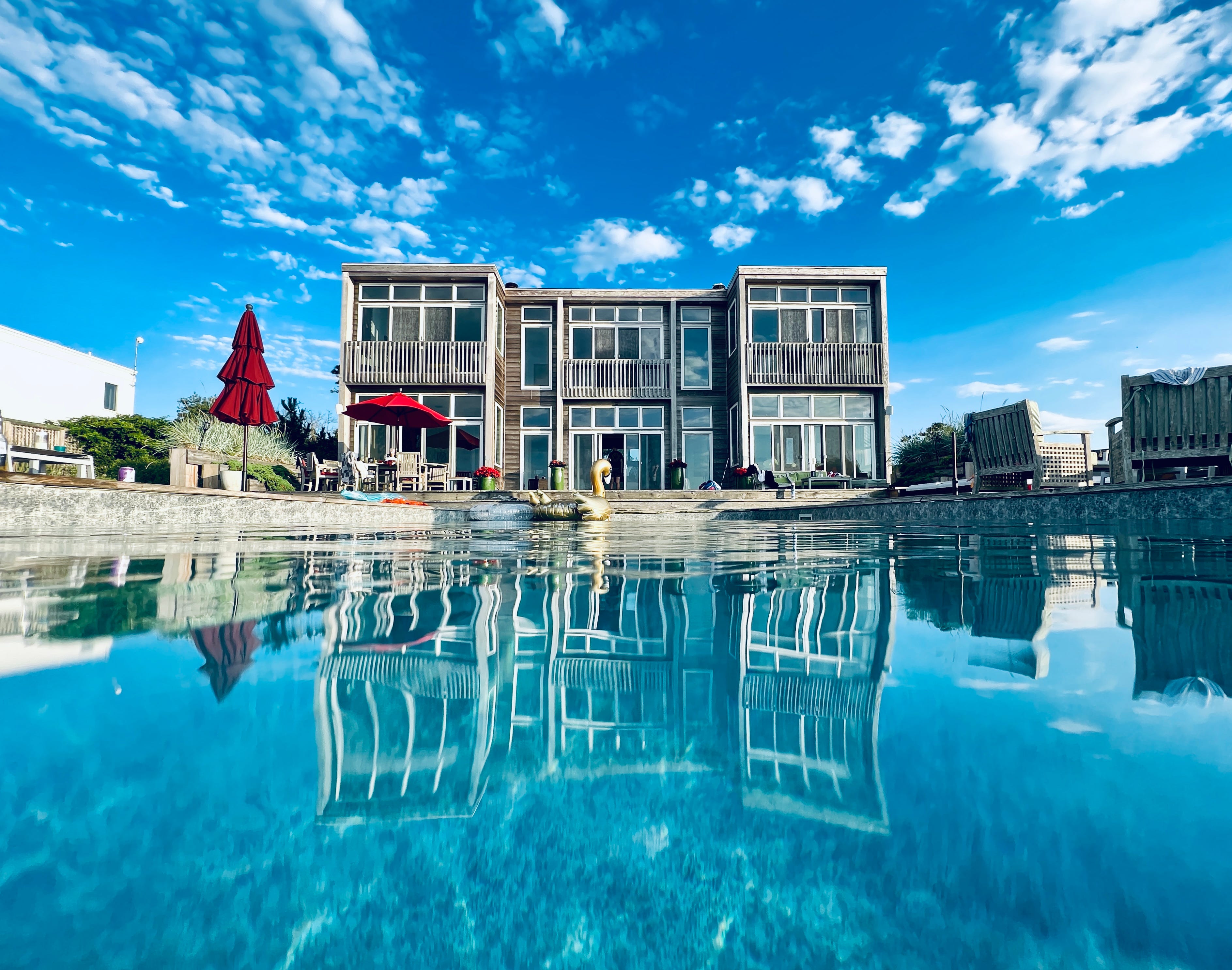
The structural benefits of the ‘schedule’ at both destinations are clear: you keep bumping into that cute guy you were too scared to say hello to the first time, or you pick up the conversation with someone from a different angle the next time, or the person you previously met now introduces you to their new friends who just arrived. The Fire Island schedule seems a little absurd given part of it involves movements between slightly different bars next to each other at intervals known as low, mid and high ‘tea’ (‘tea’ comes from the early 20th century when dancing, drinking, and socializing between gay men was euphemized to police as simply, “Tea time before dinner”). Fire Island also has more house parties that add to the schedule, given that the houses there are more luscious with pools, decks, and hot tubs. “Which party is ‘our house’ going to now?” is a common question, with the ‘House Mother’ who organized the share usually the most connected one who will list off the options. Provincetown has always been more of a guesthouse place, although less so now as the town becomes ever more exclusive.
The regimentation, where around 100 people will leave in unison for the next destination, raises a concern that people are not living in the moment—what if you are enjoying the conversation with someone? What if you are feeling at peace in the pool? What if, by making a different choice, you connect with someone who thinks like you? On my current visit to Provincetown, I trudged through the salt marsh to the partially nude Boy Beach at 4pm and was greeted by a tide of people coming the other way, questioning my decision.
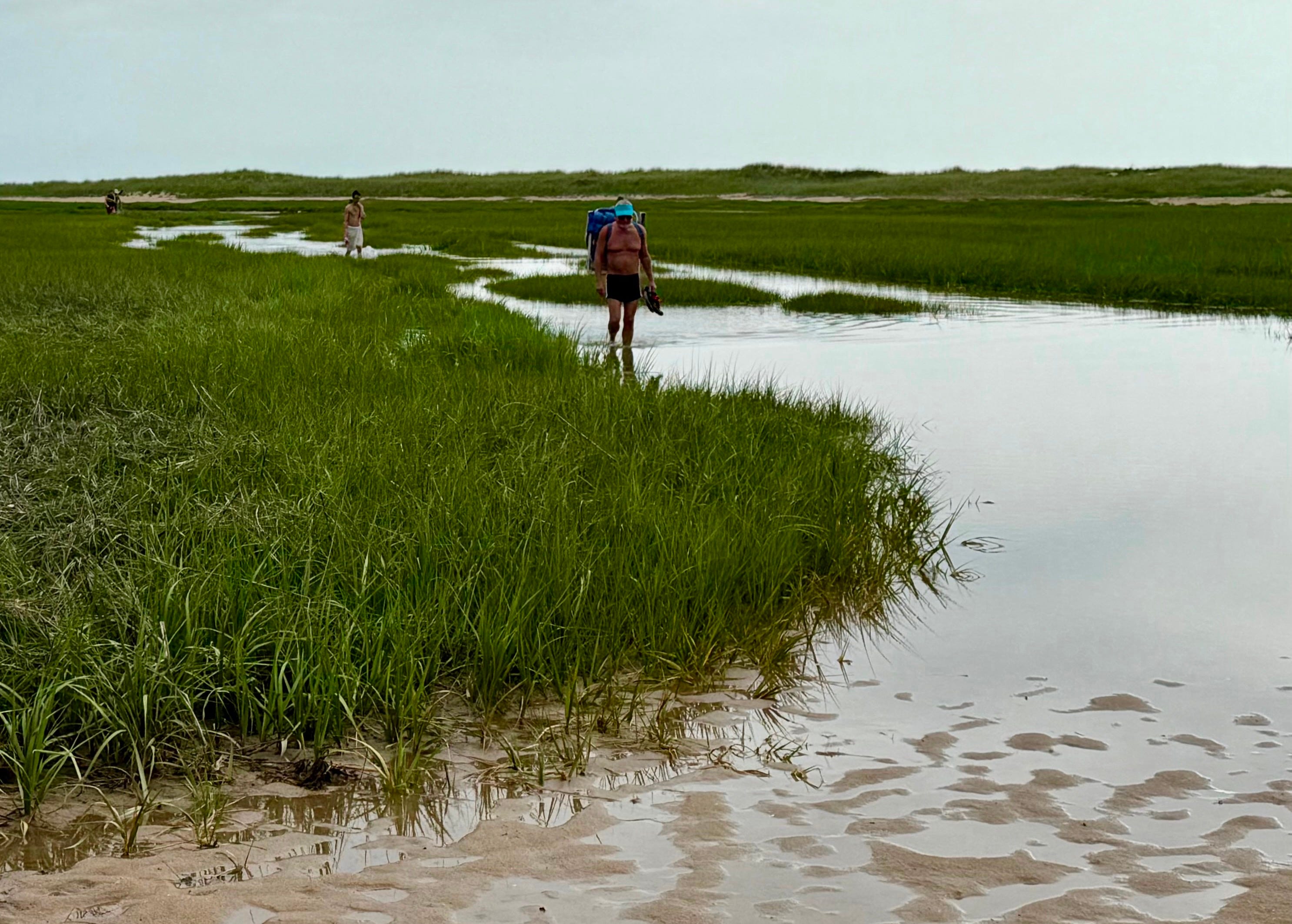
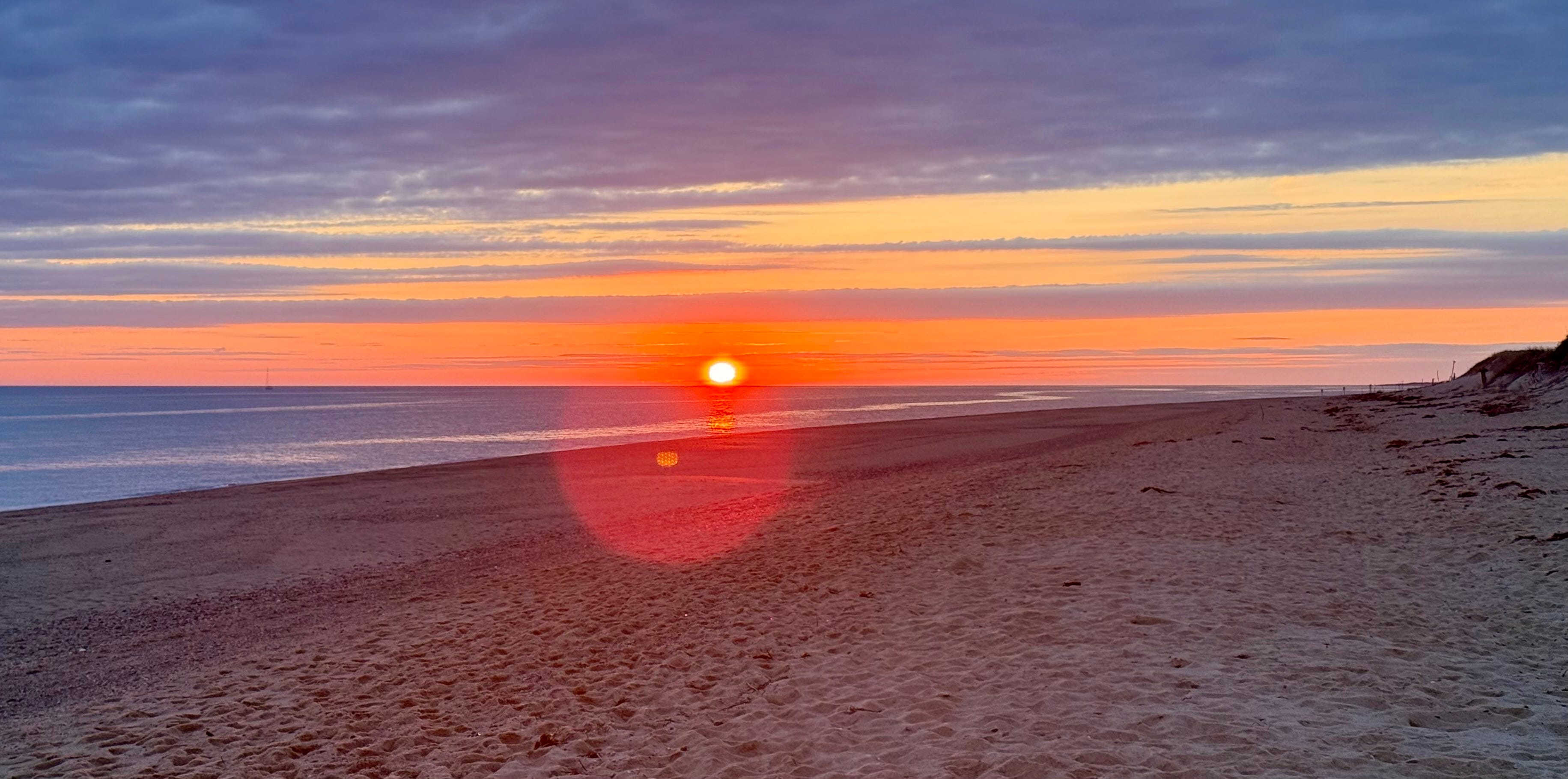
But I love to be in the sun when the UV is low and the sunset over the ocean is near. The result of my decision was to make friends with a former diplomat who loved reading, a theatre producer, and the writer of a show about the struggles of non-monogamy—a production I happened to see my first year in New York and thought, ‘I never would’ve seen this in Sydney.’ I got to share that with him as we shared the sunset on a now deserted beach.
This sense of movement between spaces responds to that young anxiety to find the perfect place.
I tried to pass this on to those I introduced to Fire Island: ‘Yes, everyone is at Daniel Nardicio’s Underwear Party, but if you’re not feeling comfortable, don’t force yourself, stay here with me and let’s talk about life in the hot tub.’ Some took the advice, others fell to the pressure. If the point of being here is connection, then seek out spaces, people, and moments that foster connection. I always find it fascinating when the structure meant to encourage a particular behavior is followed so religiously that people forget the reason they were following it.


Another questionable part of the schedule is the drinking, as the venues center on alcohol to make the economics work. It’s almost impossible to avoid drinking heavily every day, given it’s the central activity (I would love a coffee house moment sandwiched somewhere in the schedule, where people meet over a machiato). While drinking is conducive to connection, brilliantly argued by Edward Singerland in “Drunk: How We Sipped, Danced, and Stumbled Our Way to Civilization,” there is a point of excess that these places have you flying past regularly.
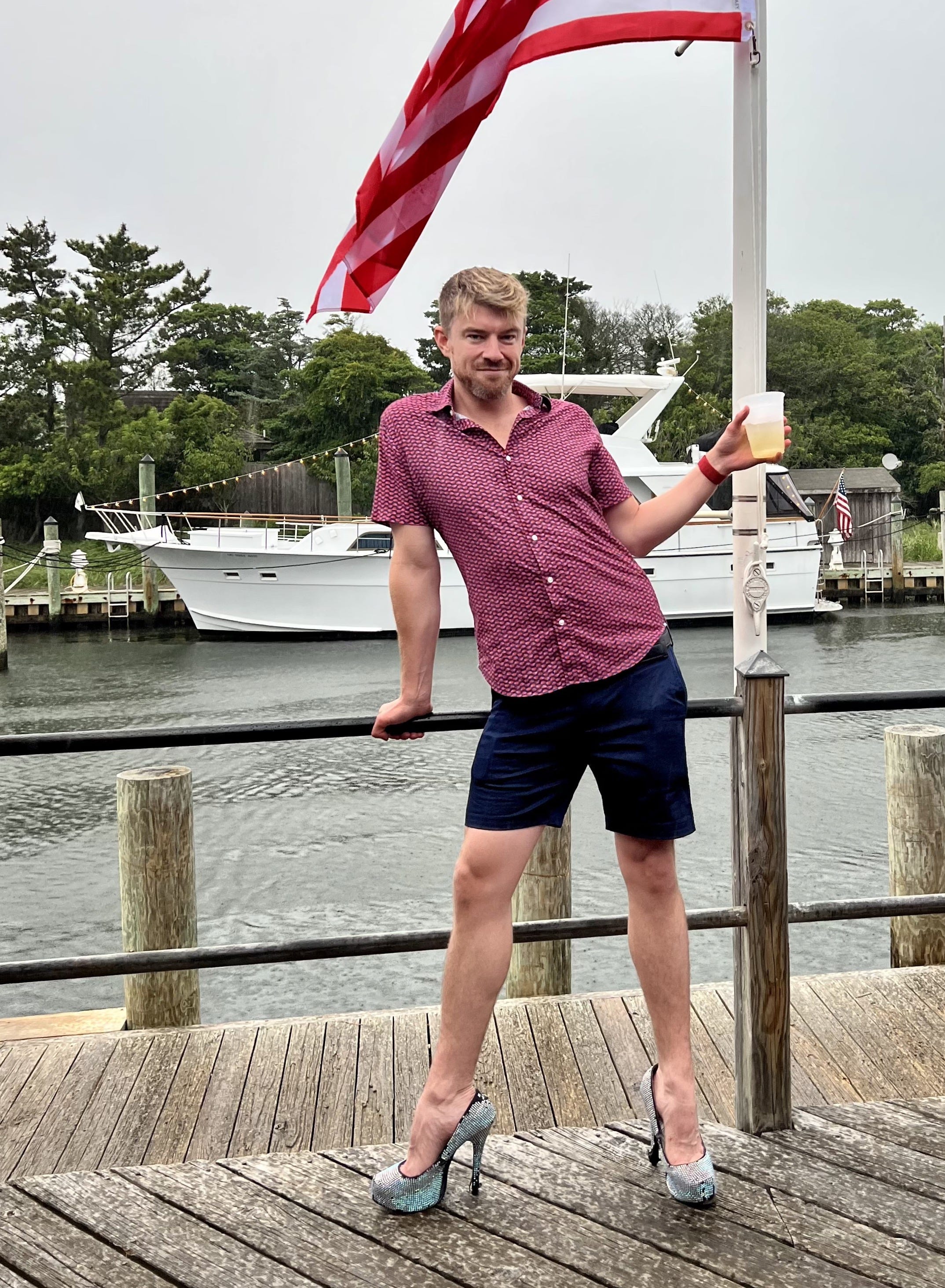
It took a couple of visits for me to realize the benefit of connections, but what I noticed instantly was the upside-down world. We adapt, even if in defiance, to straight-biased societies, despite straight people representing a minority on the Kinsey Scale. Here, you have to say, “Sorry, I’m straight,” and that’s a fundamental neural shift. No longer in adaptation mode, it’s common to see people exploring with looks at tea, being a bit performative, yes, and certainly peacocking to the extent that people start planning their looks well in advance. These ‘showy gay summer looks’ are almost a category of clothing on Amazon. But it’s experimentation nonetheless. I tried high heels for the first time and discovered that the height and toe-numbing were not for me. People even experiment with more gender-conforming clothing, knowing they don’t have to signal that they are gay. I’ve often been assumed to be straight, so I enjoy being assumed to be who I am, from dinner to the grocery store to, yes, the bar and club. The Other is flipped, if just for a summer.
It’s one of our great strengths as humans to adapt; it’s how we settled in every corner of the globe, from the tundra to the tropics, and adapting to the expense at these destinations is another. Share houses on Fire Island are a key way to make it affordable, requiring a commitment of one week a month over five months with friends and friends of friends. People will often sublet their weeks, or the house will sell its couch and even spare floor space, to further reduce costs. The mathematical gymnastics and hidden extra fees that pop up make it hard to estimate how much you’re really spending. “There’s the pool heating fee, of course,” one leasing agent told me, in addition to cleaning fees. And “a week” is actually 6 nights, with a fallow night between guests. And there are always a couple of people who need to arrive a day or two later or leave a day or two early because these assigned—not chosen—weeks invariably conflict with their calendars. And sometimes when subletting, you’ll have to sell at a discounted rate, especially if it’s in the quieter month of September (my preferred month). Given all this, the per-night cost is a lot higher than the sticker price.
The costs only go up from there when you factor in food, drinks, tips, transportation, and the time it takes to get there. A meal may be as cheap as $25, including tax and tip, but it’s mostly processed and cheese (that was the cost of a chicken and cheese quesadilla I couldn’t finish at Bay Cafe in Provincetown). Fire Island has a grocery delivery service that slightly reduces costs, and there’s a grocery store in Provincetown that’s within a 20-minute walk for most (just don’t pay too much attention to all the food you throw out on the last day). Drinks are strong at least, and two “Provincetown Punches” or “Island Punches” will be enough for tea at $18 each, including tip. The transport costs are likely comparable to those of other destinations. Still, they cost you in time and convenience: For Fire Island, you’re switching from old trains to rickety buses and then to a ferry, with transfer and travel times that mean you need to allow 4 hours from New York for a destination 80km away.
The lack of affordability has affected racial diversity, only being addressed in recent years. In 2018, I met a Black guy on Fire Island, and I asked him why there weren’t more Black people here—he was literally the first one I had seen in three years of visiting. His answer was nuanced: “It’s known as a rich white person’s place, and so even if a Black person can afford it, they reject it for not being open to them.” He added he was only there as a sex worker. Since 2020, the change has been noticeable, and my non-white friends have no hesitation about going there.
Economics aren’t easy for the people who keep these places running as well, with the exhaustion obvious in staff slinging vodka sodas in the heat, and businesses running razor-thin margins. Businesses cut corners wherever they can, dodging tax with cash-only bars, hiring teenage or immigrant labor, making sugary drinks with cheap booze (the punches), and making very average food. It’s not a lucrative choice for workers, given that they face similar expenses to patrons, and yet it should be given that they are only here seasonally and are taken away from their day-to-day lives.
Showtunes Sunday sing-along at the Pavilion, Fire Island, 2023
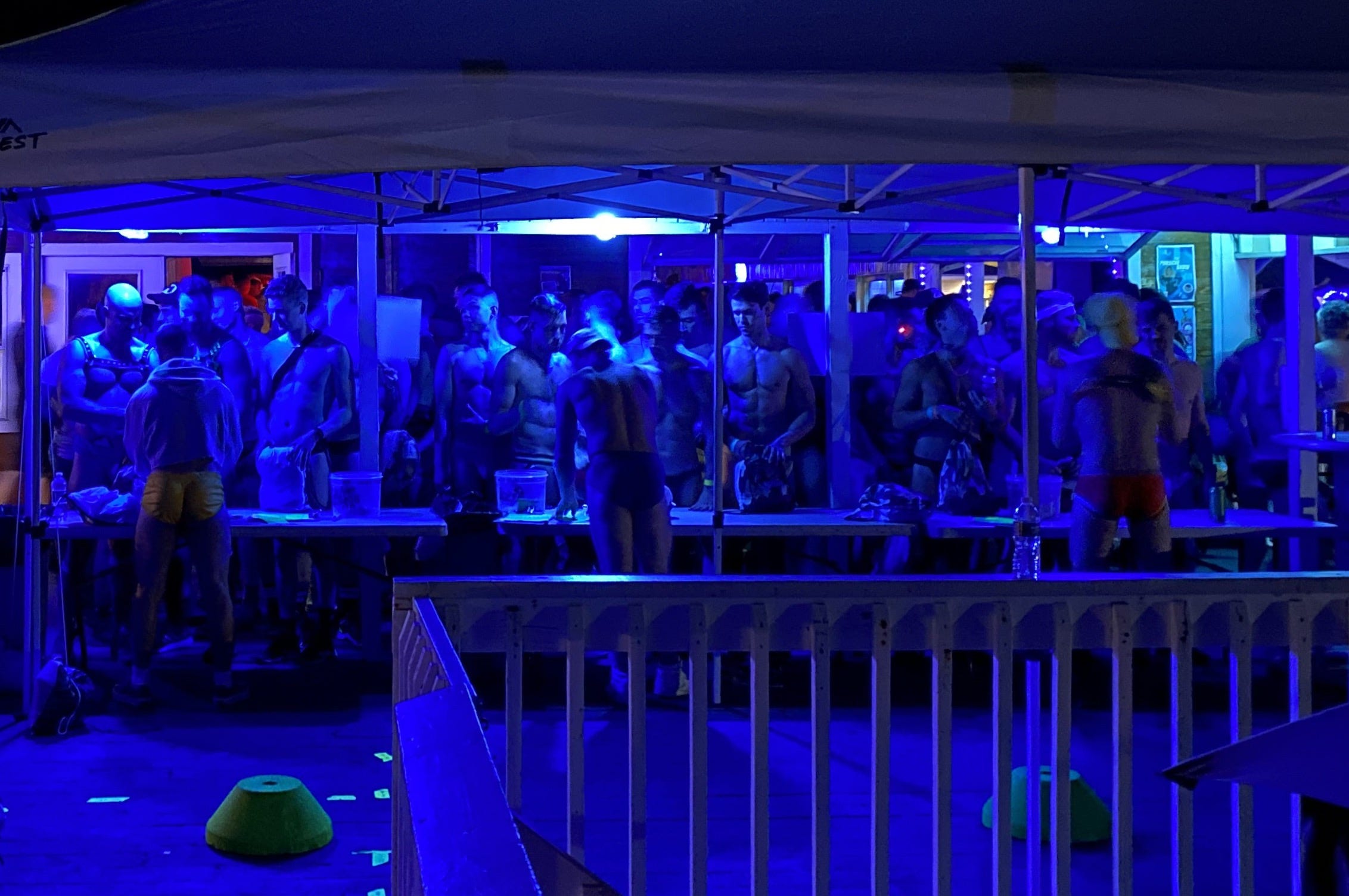
Fire Island is staffed mostly by New Yorkers, some of whom benefit from subletting their apartments in the city, or the timing may work for the ever-intermittently employed New York artist. One I spoke with said it can be hard to remember that you’re not on vacation and you need to be saving money, saying he almost just broke even one summer. I took the opportunity to work on Fire Island one weekend in 2021, helping to run the clothes check for the Underwear Party, which made for a nice break-even vacation. However, that night, I was exhausted and excited for bed, not for befriending.
As for Provincetown, Eastern Europeans have come to make up a lot of the workforce. These workers are usually housed in the adjacent town of Truro and are bussed in daily. A Lithuanian I spoke with said he was on a 6-month work visa and chose Provincetown not because it was particularly lucrative but because it was safe, explaining, “They have ‘open carry’ in the US, which means they can just have guns on them all the time.” Patrons comfort themselves with, “But these people are making tonnes in tips.” The worker I listened to was guarding the gate to the beach, so no tips were coming his way, and that jar on the bar will be spread thin—if it is by the Americans who take the more lucrative bartender jobs. These jobs seem more like subsistence than substantive.
In the bones of these localities are the remnants of an affordable origin, with the shack-like homes now fitted with air conditioning and heated pools, the cottage like shops that look too short for a building are now boutiques with beige beach art, and narrow streets (or the lack of streets) now all part of the charm. I wonder what the working class and struggling artists who created these havens would think of the wealthy who now have a hold on Provincetown, intent on keeping the charm while losing the charmers.
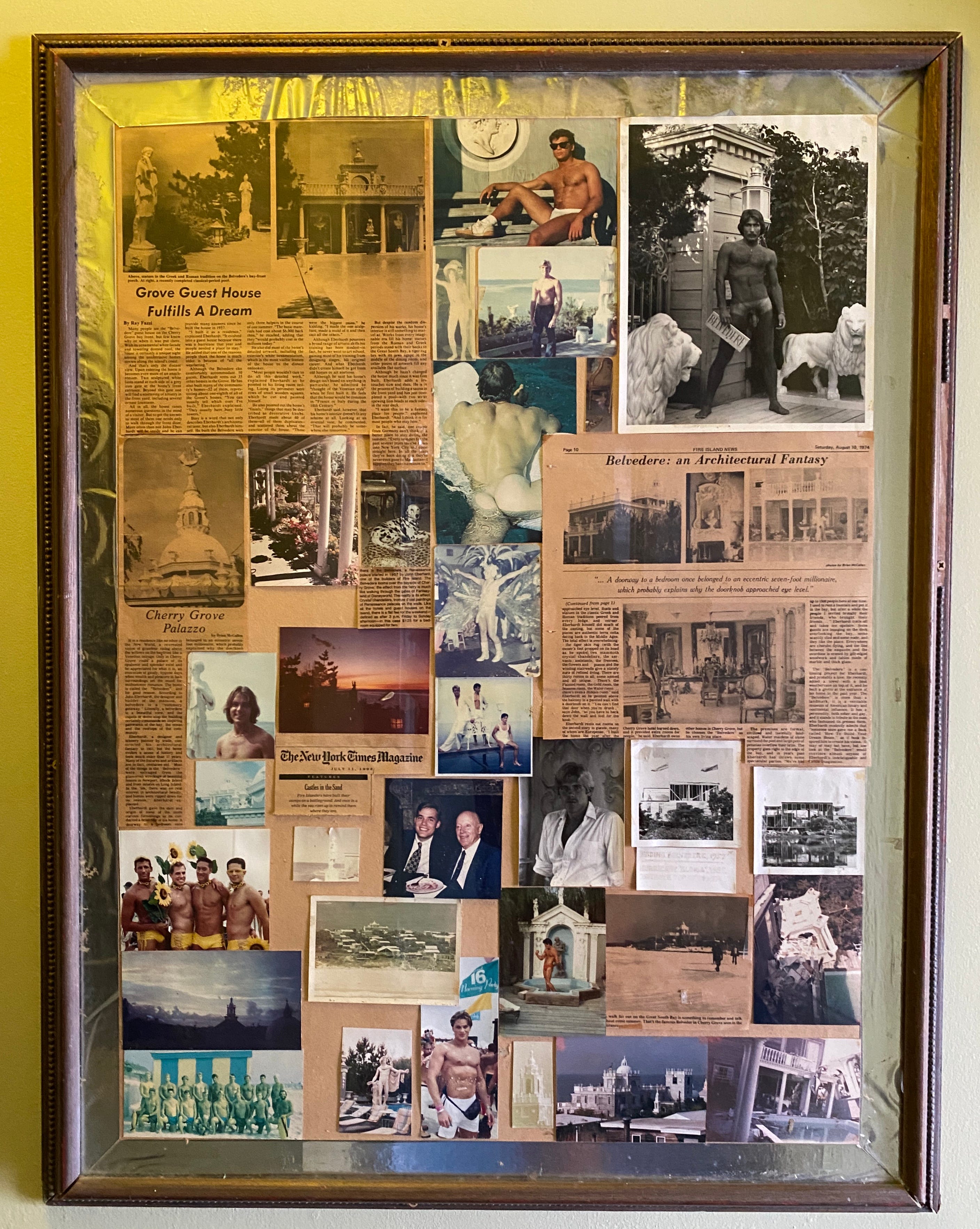
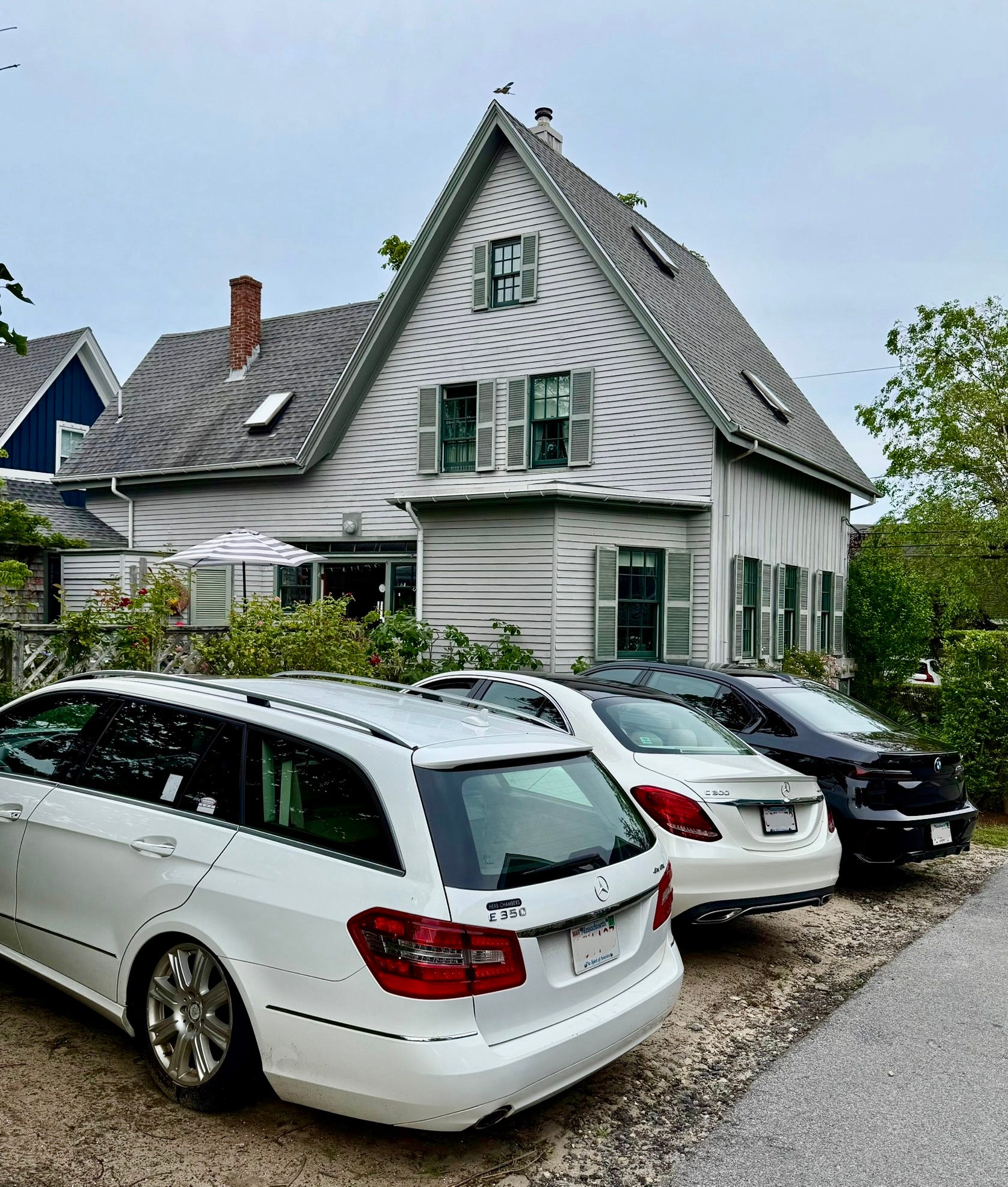
I’m staying in a tiny two-story cottage, the home of a friend who chose to spend more time here than in New York when remote work became possible. Only 15 years ago, it was $300,000, which seems like a lot for the two-room, narrow house with a ladder staircase at this remote end of the world. He’s a successful corporate lawyer, and this is the best he can afford, or rather, couldn’t afford anymore: Today, it’s estimated to be above $1 million.
Real estate unaffordability will go down as the second most catastrophic contribution of Boomers after climate change. I don’t know what the solution would be, but it’s certainly not this. Three years before Ezra Klein took aim at leftists undermining affordability in “Abundance,” there was a deeper dive by Jenny Schuetz in “Fixer Upper.” Schuetz spelt out how both the left and the right have conspired to keep house prices high, with the right blocking affordability measures and the left prioritizing neighborhood character above all else. Fire Island has geographic limits on its development, but Provincetown’s limits are more deliberate. Those who took advantage of what was built before refuse to upgrade the infrastructure to allow more housing and block anything that would be too gauche. There are certainly ways you could increase density while maintaining character, but such is the way of Boomers to take the shade of trees rather than plant more.
Younger generations could always do more. After my first visit, I brought the spirit of these destinations back home and created my own PTown and Fire Island. A friend branded them ‘Big Gay Weekends.’ We would pick a town with a gay event, such as the Queen’s Birthday Disco at the Blackheath Community Hall, organized by Blue Mountains Pride, and rent a house nearby. The Blue Mountains event was the first time I had been in a space with so many gay women and people of all ages—albeit mostly older ages—but the younger people there were people worth meeting. After the Canberra Bushdance, the Daylesford ChillOut Festival, and several more trips back to the Blue Mountains, we started choosing destinations where we would bring the gay, gay-crashing the Barossa Valley wine region with 20 of us. “Are you a bachelor party?” The bemused wineries asked, “Confirmed bachelors,” we said. All of these were cheaper than a visit to Fire Island or Provincetown. The gay disco, for instance, was BYO-whatever-you-want for free—no $18 sugary ‘rum’ punch—and we got to do hikes, wine tasting, or just running in open fields (seriously, we did that last one).


These trips, as fun as they were, don’t compare to the number of new friends you can easily make in Provincetown and Fire Island, but they were much better at deepening friendships. And that’s why on this trip to PTown, I’ve spent much more time writing than collecting a quantity of friendships of unknown quality. I wish a greater focus on quality connections were possible, of finding your people, because in these homogenized environments, I'm not sure what people truly value. Perhaps through rose-colored nostalgia, I imagine that before the oppressive economics, there was more time for deeper connection. And I wonder what younger generations would do if they had more of a say and a stake in how people connect. Already, we know that it wouldn’t have taken George Floyd to center diversity, there would be less alcohol, and the subsistence working class would be better looked after given it’s a much more relatable reality.
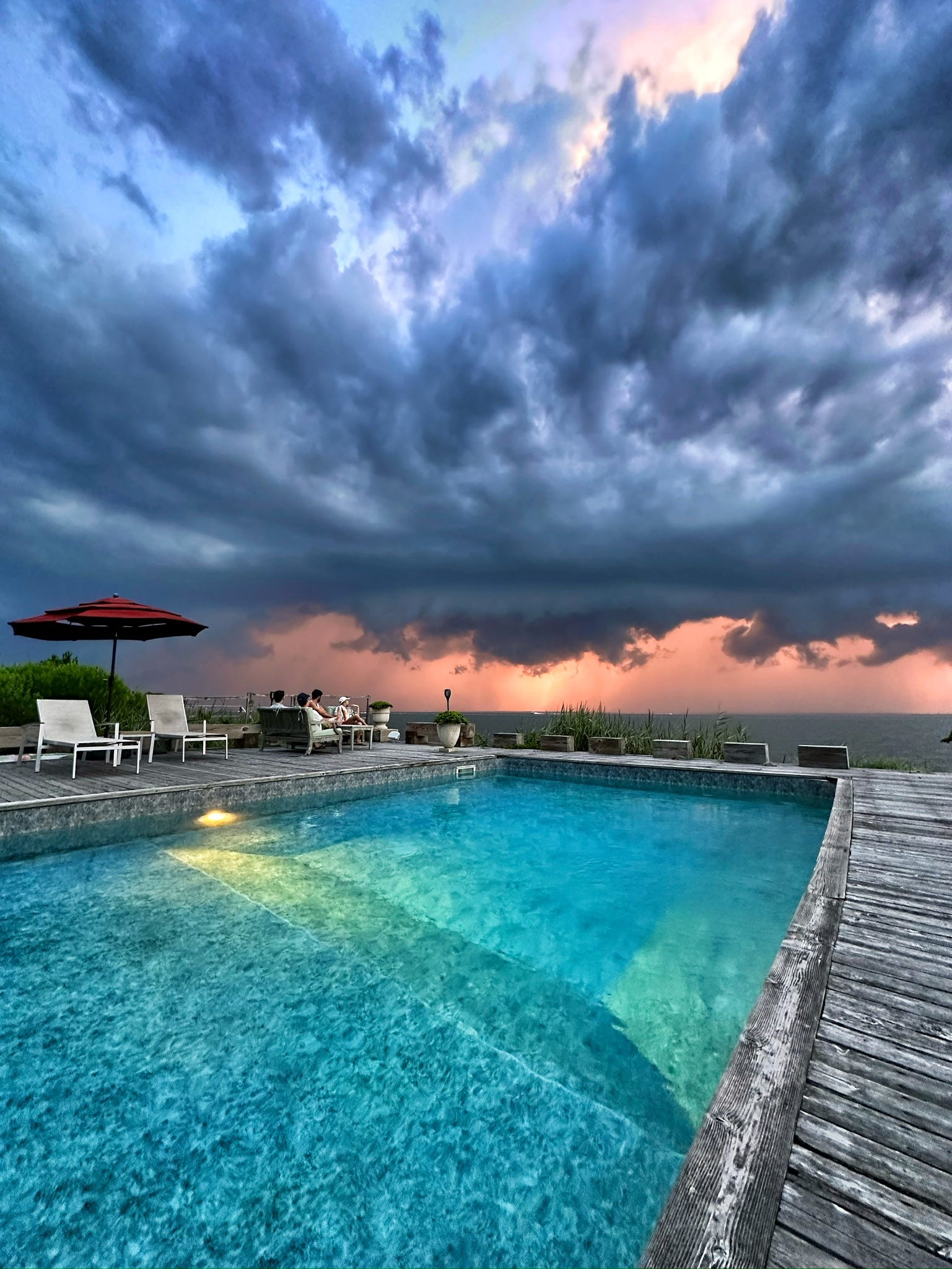
Something will always grow after the death, it just takes time and effort. Younger generations will build physical community elsewhere. But we know it won’t be at Provincetown or Fire Island, which will soon vanish off into the horizon, consumed by wealth and the sea.